ISO 11930 Preservative Efficacy Testing: Challenge Testing, Acceptance Criteria & Failure Interpretation
How the ISO 11930 challenge test works, what Criterion A and B mean, why neutralisation matters and how to read a failed result.
By CSL Microbiology team · Technical pillar page · Checked against ISO and EUR-Lex sources

Quick answer
ISO 11930 preservative efficacy testing is the standard method for judging whether a cosmetic is adequately protected against microbial contamination. The product is deliberately inoculated with five reference organisms, surviving microbes are counted on days 7, 14 and 28, and the log reductions are compared against Criterion A or Criterion B. Antimicrobial protection depends on the whole product: the preservative system, the formulation, the packaging and the intended use. In 2026 ISO 11930 is being revised, and the 2019 edition remains the one in force.
01What ISO 11930 actually evaluates
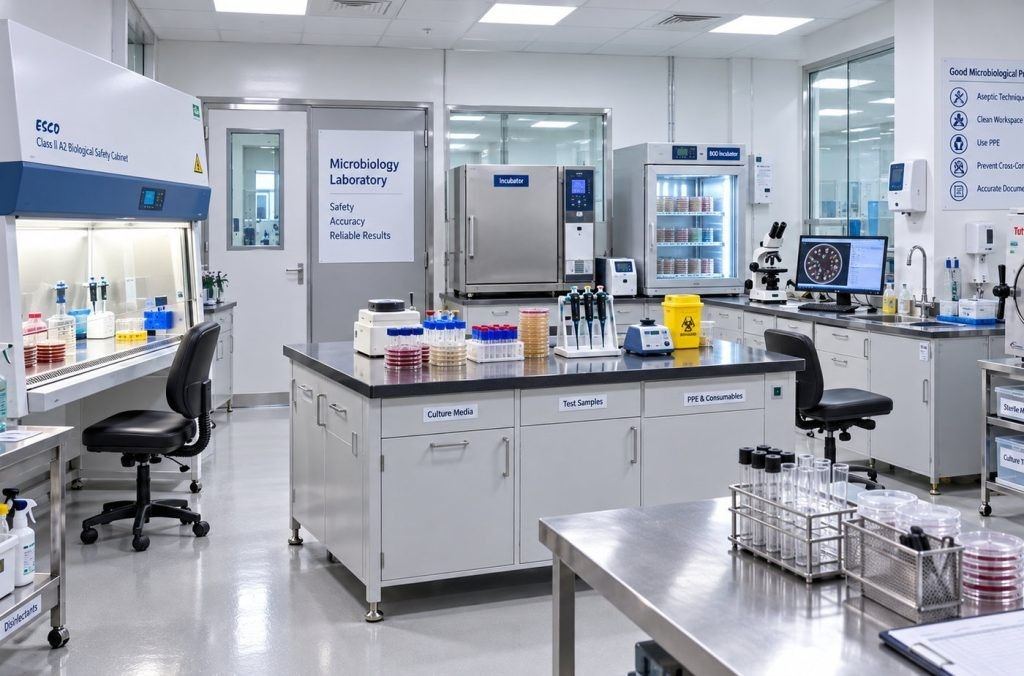
An ISO 11930 challenge test asks whether a finished cosmetic formulation can control deliberate microbial contamination under standardised conditions. It is a central part of preservative efficacy testing for cosmetics, particularly for water-containing formulations.
This is different from routine microbiological quality testing, which counts the microbes already present in a batch against limits such as those in ISO 17516. Cosmetic challenge testing instead shows how the formula responds after microorganisms have been introduced on purpose, as can happen in use.
ISO 11930 is primarily designed for water-soluble or water-miscible cosmetic products, and can be adapted for products in which water is the internal phase. It does not apply to products whose microbiological risk has been determined to be low under its Annex A and ISO 29621, such as many anhydrous or high-alcohol products. [1] [2]
02How does cosmetic challenge testing work?
The ISO 11930 panel uses five reference organisms:
- Pseudomonas aeruginosa (ATCC 9027)
- Staphylococcus aureus (ATCC 6538)
- Escherichia coli (ATCC 8739)
- Candida albicans (ATCC 10231)
- Aspergillus brasiliensis (ATCC 16404)
Each organism is added to a separate portion of the product, typically giving a bacterial count of around 105 to 106 colony-forming units per gram. Surviving microorganisms are then counted on days 7, 14 and 28. [1] [4] The core calculation is:
R = log10 N0 − log10 Nx
where N0 is the initial viable count and Nx is the viable count at the sampling time. A 1-log reduction is a 90% fall, a 2-log reduction 99% and a 3-log reduction 99.9%. Both the size and the timing of the reduction matter, as does the absence of any later regrowth.
Recovery controls are just as important. If residual preservative keeps acting during dilution or plating, survivor counts are artificially low. ISO 11930 therefore requires the laboratory to show that its neutralisation and recovery system works for the formulation and each test organism. [1]
03Acceptance criteria: Criterion A and Criterion B
The ISO 11930 acceptance criteria set the minimum log reduction each organism must reach at defined time points, combined with a “no increase” (NI) requirement relative to the previous count. Criterion A asks for faster reduction than Criterion B, so understanding Criterion A vs Criterion B in ISO 11930 comes down to timing and, for moulds, magnitude.
Table 1. ISO 11930:2019 acceptance criteria (minimum log reduction)
| Test organism | Criterion | Day 7 | Day 14 | Day 28 |
|---|---|---|---|---|
| Bacteria (P. aeruginosa, S. aureus, E. coli) | A | ≥3 log | ≥3 log and NI | ≥3 log and NI |
| B | not assessed | ≥3 log | ≥3 log and NI | |
| Candida albicans | A | ≥1 log | ≥1 log and NI | ≥1 log and NI |
| B | not assessed | ≥1 log | ≥1 log and NI | |
| Aspergillus brasiliensis | A | not assessed | ≥0 log (no increase on the start count) | ≥1 log and NI |
| B | not assessed | ≥0 log (no increase on the start count) | ≥0 log and NI |
NI = no increase compared with the previous count. Testing laboratories generally interpret “no increase” as a rise of no more than 0.5 log, reflecting normal counting uncertainty. Values as reproduced from ISO 11930:2019 in Nadarzynski et al. 2022. [4]
Criterion A and B are not simply “rinse-off” and “leave-on” criteria. A product that meets Criterion A is considered adequately protected. A product that meets only Criterion B is acceptable only when a microbiological risk assessment shows that factors not related to the formulation, such as protective packaging, give adequate protection in use.
04Why neutralisation can change the meaning of a result
Neutralisation is not a laboratory detail; it decides whether a challenge-test result can be interpreted at all. If the preservative continues acting during sample preparation, dilution or recovery, viable counts underestimate the microorganisms that actually survived.
ISO 11930 requires neutraliser efficacy to be demonstrated. The 2019 edition also allows two diluent compositions for bacteria and C. albicans, and specifies how low colony counts (fewer than 30 for bacteria and C. albicans, fewer than 15 for A. brasiliensis) are recorded at the dilution at which neutralisation was verified. [1]
In neutralisation efficacy testing, the laboratory shows that the procedure stops residual antimicrobial activity without harming microbial recovery. Without adequate neutralisation and recovery controls, an apparently strong log reduction may not reflect the protection the product really gives.
05What a failed challenge test can reveal
A failure does not automatically mean the preservative concentration is too low. Possible contributors include:
- preservative availability within the formulation
- pH and water activity
- partitioning between oil and water phases
- interactions with surfactants, emulsifiers or other ingredients
- organism-specific susceptibility
- inadequate neutralisation or recovery
- raw-material microbial burden
- manufacturing contamination
- packaging-related exposure
In a custom cosmetic formulation these factors interact rather than act independently. A failed result should trigger a formulation-level root-cause investigation, not an automatic increase in preservative. The investigation covers the formulation matrix, preservative availability, recovery controls, manufacturing conditions and the packaging system before a corrective action is chosen.
Table 2. Failure pattern and investigation pathway
| Observation | Possible interpretation | Investigation focus |
|---|---|---|
| Slow initial reduction | Limited antimicrobial availability or an organism-specific response | pH, preservative system and formulation matrix |
| One organism fails while others pass | Spectrum or susceptibility difference | Organism-specific recovery and preservative activity |
| Initial reduction followed by regrowth | Antimicrobial control not maintained | Preservative availability, formulation changes and packaging |
| Unexpectedly strong reduction | Possible recovery or neutralisation issue | Neutraliser suitability and controls |
| Multiple organisms fail | Broader preservation weakness | Reformulation, manufacturing and microbiological risk review |
Peer-reviewed work shows that preservative performance depends on the concentration of free antimicrobial in the water phase, not simply the total amount added. In o/w emulsion gels, the antimicrobial effect of phenoxyethanol tracked its free concentration in the water phase, which changed with oil polarity, water content and emulsifier micelles. This matters most for emulsions and other multiphase systems. [5]
Investigating an ISO 11930 failure?
CSL microbiologists review the reduction curve, neutraliser controls, formulation matrix, preservative availability, raw-material microbiology and packaging together before recommending a corrective strategy.
Discuss preservative efficacy testing06Preservation is more than the preservative
A 2018 peer-reviewed review describes cosmetic preservation as a combination of chemical, physical and physicochemical strategies, including hurdle technology, where several conditions together restrict microbial growth. [6] This matches the broader framework of ISO 11930: protection can come from preservative chemistry, pH, water activity, raw-material quality, manufacturing controls under good manufacturing practice (ISO 22716) and packaging. [3]
A 2025 review of microbial contamination in cosmetics examined contamination routes, regulatory surveillance and consumer-use factors. Its analysis of EU Safety Gate (RAPEX) notifications found 215 cosmetic products, from 37 countries of origin, notified for microbial contamination between 2005 and 2025. [7]
Challenge testing is therefore one layer of microbiological evidence. It does not replace hygienic manufacturing, raw-material control or suitable packaging.
07What is changing in 2026?
ISO 11930 itself is being revised. ISO lists ISO 11930:2019 (second edition) as current, with Amendment 1 published in 2022. A third edition, ISO/CD 11930, is at committee-draft stage; its comment period closed in September 2026. [1] [8]
Until the new edition is published, ISO 11930:2019 with its 2022 amendment remains the reference method. CSL microbiologists will update this guide when the revised standard is released.
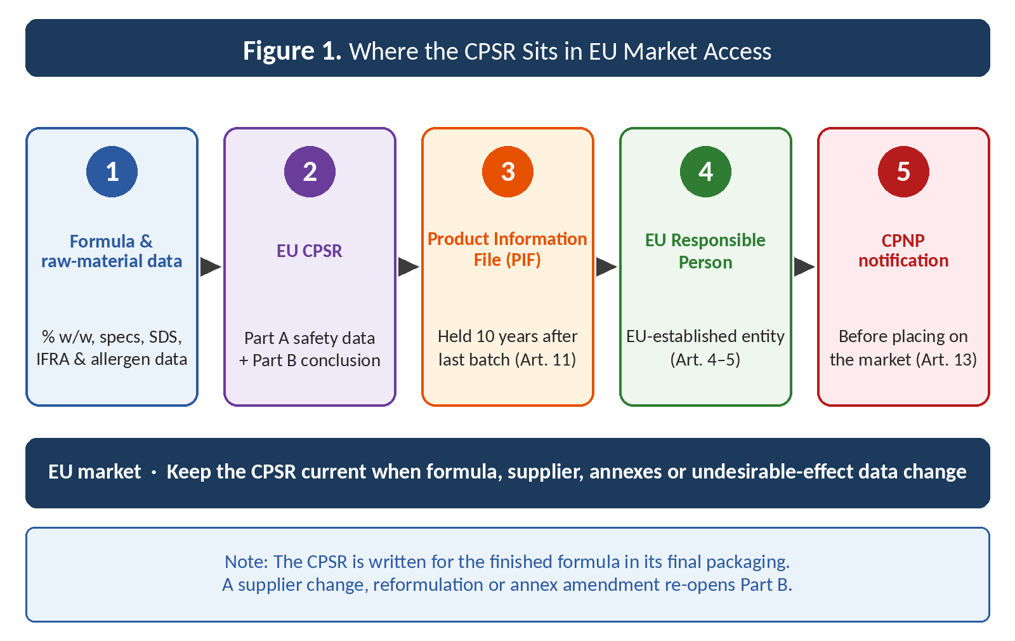
In the EU, Annex I (Part A, point 3) of Regulation (EC) No 1223/2009 requires the Cosmetic Product Safety Report to include microbiological quality information, including the results of the preservation challenge test. [9] ISO 11930 is the technical method for generating and interpreting that evidence; the legislation sets the legal safety framework. See the EU CPSR guide.
08Conclusion
ISO 11930 challenge testing gives a structured way to evaluate the antimicrobial protection of a cosmetic and to interpret microbial reduction over time. Reliable results depend on the whole formulation system, verified neutralisation and recovery, and correct use of Criterion A or B. With the standard under revision, preservation assessment should stay aligned with the current edition and with each market’s regulatory requirements.
09References
- International Organization for Standardization. ISO 11930:2019 Cosmetics — Microbiology — Evaluation of the antimicrobial protection of a cosmetic product; and Amendment 1:2022. Link
- International Organization for Standardization. ISO 29621:2017 Cosmetics — Microbiology — Guidelines for the risk assessment and identification of microbiologically low-risk products. Link
- International Organization for Standardization. ISO 22716:2007 Cosmetics — Good Manufacturing Practices (GMP) — Guidelines on Good Manufacturing Practices. Link
- Nadarzynski A, Scholz J, Schröder MS. Skin barrier enhancing alternative preservation strategy of O/W emulsions by water activity reduction with natural multifunctional ingredients. Cosmetics. 2022;9(3):53. Link
- Puschmann J, Herbig ME, Müller-Goymann CC. Correlation of antimicrobial effects of phenoxyethanol with its free concentration in the water phase of o/w-emulsion gels. Eur J Pharm Biopharm. 2018;131:152–161. Link
- Halla N, Fernandes IP, Heleno SA, et al. Cosmetics preservation: a review on present strategies. Molecules. 2018;23(7):1571. Link
- da Silva JD, Silva FAM, Rodrigues CF. Microbial contamination in cosmetic products. Cosmetics. 2025;12(5):198. Link
- International Organization for Standardization. ISO/CD 11930 Cosmetics — Microbiology — Evaluation of the antimicrobial protection of a cosmetic product (third edition, under development). Link
- Regulation (EC) No 1223/2009 of the European Parliament and of the Council of 30 November 2009 on cosmetic products, Annex I. Link
Update log
- Published; content checked against ISO, EUR-Lex and peer-reviewed sources by CSL scientists