Randomised controlled trialAntiperspirant · sweat reduction
20% aluminium chloride hexahydrate vs 1% aluminium acetate, one per underarm
Randomised split-axilla · 19 adults · gravimetric sweat test
The aluminium chloride side sweated significantly less than the comparison side (p=0.0002), showing how gravimetric testing separates actives.
Small study; 20% aluminium chloride is prescription strength in some markets.
Swary JH et al. J Cosmet Dermatol 2015;14(4) ↗
Published studyDeodorant · underarm microbiome
Stopping and restarting deodorant or antiperspirant vs non-users
Experimental study · 17 adults · 8 days · culture and 16S sequencing
Antiperspirant sharply reduced underarm bacterial density, and product users had a different bacterial community from non-users.
Not randomised; no odour endpoint.
Urban J et al. PeerJ 2016;4:e1605 ↗
Randomised controlled trialHand hygiene · office workers
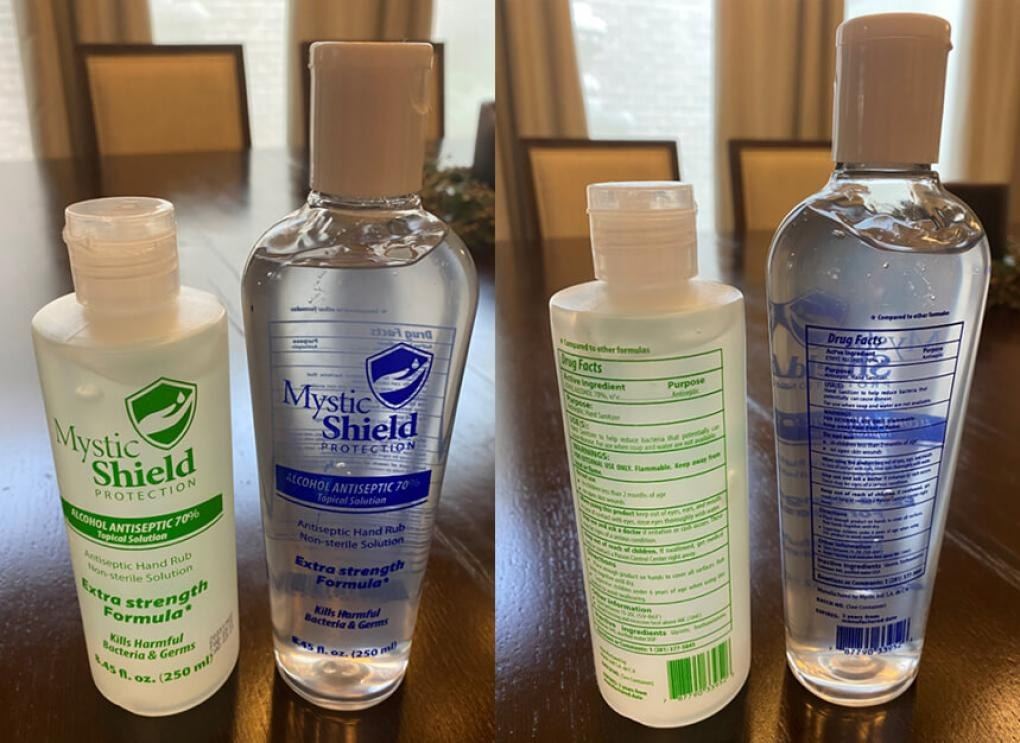
Alcohol hand disinfectant at desks vs usual practice
Randomised controlled · 129 office workers · 12 months
Colds (OR 0.35), fever (OR 0.38) and cough (OR 0.45) were all less frequent, with fewer days of illness.
Hübner NO et al. BMC Infect Dis 2010;10:250 · PMID 20735818 ↗
Randomised controlled trialHand hygiene · childcare
Hand-sanitiser programme vs soap-and-water vs control
Cluster-randomised · 24 day-care centres, 911 children · 8 months
The sanitiser group had 23% fewer respiratory infections and 31% fewer antibiotic prescriptions than control.
Azor-Martinez E et al. Pediatrics 2018;142(5):e20181245 · PMID 30297500 ↗
Systematic reviewHand hygiene · community
Community hand-hygiene interventions
Systematic review and meta-analysis · 30 studies
Better hand hygiene cut gastrointestinal illness by 31% and respiratory illness by 21%; education with plain soap gave the largest benefit.
Aiello AE et al. Am J Public Health 2008;98(8):1372–1381 ↗
Controlled trialHand hygiene · skin tolerance
Alcohol hand gel vs soap-and-water handwashing
Prospective comparison · 32 nurses · 6 weeks
Irritation and dryness rose substantially with soap and water but changed little with the alcohol gel, confirmed by skin-water measurements.
Boyce JM et al. Infect Control Hosp Epidemiol 2000;21(7):442–448 · PMID 10926393 ↗
Controlled trialHand sanitiser · emollients
Hand rub with vs without emollients
Double-blind repeated application · 35 adults · 2 weeks
Redness and dryness scores were lower with the emollient-containing rub (P=0.022).
Kampf G et al. Contact Dermatitis 2005;53(6):344–349 · PMID 16364124 ↗
Randomised controlled trialHand care · barrier creams
Skin care, skin protection, both, or no advice
Four-arm randomised · 1,020 metalworkers · 12 months
Skin worsened in controls, while combined skin care and protection creams gave the largest improvement.
Kütting B et al. Br J Dermatol 2010;162(2):362–370 · PMID 19804591 ↗
Randomised controlled trialHand cream · healthcare workers
Ward cream dispensers with feedback vs usual care
Cluster-randomised · 19 wards, 501 workers · 12 months
No significant difference in hand-eczema severity overall, though mild cases improved more, showing that access alone is not enough.
Primary endpoint not significant.
Soltanipoor M et al. Contact Dermatitis 2019;80(6):365–373 · PMID 30652317 ↗
Randomised controlled trialFoot care · cracked heels
Urea, glycerin and petrolatum foot cream vs placebo cream
Randomised, double-blind, placebo-controlled · 167 people with diabetes · 4 weeks
Deep open heel fissures remained in 6% vs 24% with placebo (P=0.002), and dryness improved more with the test cream.
Gin H et al. Diabet Med 2017;34(9):1309–1317 · PMID 28627029 ↗
Systematic reviewFoot care · urea
Moisturisers for dry feet in diabetes
Systematic review and meta-analysis · 12 RCTs, 603 participants
Urea creams outperformed standard base creams for dryness at 4 weeks, with high-certainty evidence.
Borgström K et al. Front Clin Diabetes Healthc 2026;7:1922860 ↗
Published studyIntimate care · lactic acid wash
External intimate wash with lactic acid, pH 4.2
Open, gynaecologist-supervised · 36 women · 28 days
No increase in dryness, redness, itch or stinging; moisturisation rose and the vulvar microbiome was unchanged.
No control group; manufacturer-affiliated authors.
Brown ADG et al. Antibiotics 2020;9(2):55 · PMID 32024047 ↗
Controlled trialLip care · dry lips
Lip product with 0.5% or 2% pseudo-ceramide vs 0%
Controlled comparison · 31 women · 4 weeks
The 2% formula significantly reduced lip roughness at 2 and 4 weeks and improved barrier function.
Tamura E et al. Int J Cosmet Sci 2021;43(2):158–164 · PMID 33258166 ↗
These are published studies on ingredients, methods and routines, not on products we have made. A finished product needs its own testing before a claim goes on pack, and we design that study with you. See the full evidence library