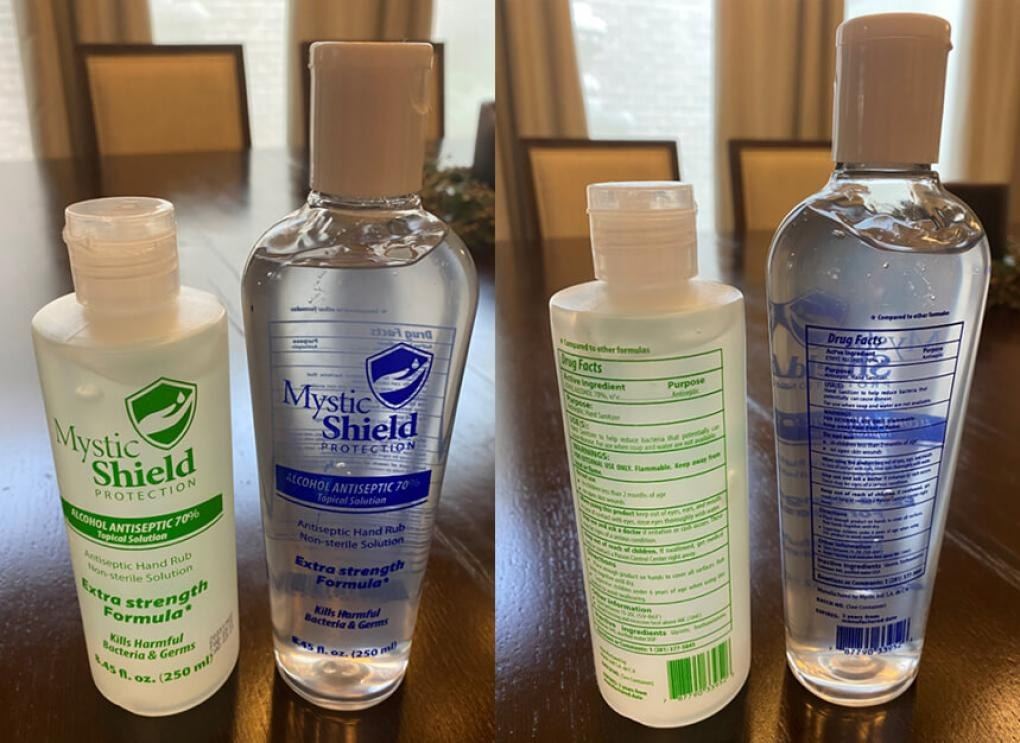
Recall: hand sanitiser pulled from US shelves over hidden methanol
An alcohol-based hand sanitiser made in Mexico was recalled after testing found undeclared methanol. What happened, and the controls that prevent it.
Read article
Service · Testing
Stability, packaging compatibility, extractables and leachables, preservative efficacy, microbiology, heavy metals and in-vitro safety work to ISO and OECD methods, ending in a safety assessment accepted as the base for every market. Every study is planned and reviewed by CSL scientists.
Guires Cosmetic Science Lab
Our cosmetic testing services cover accelerated stability testing and real-time stability, preservative efficacy testing (ISO 11930 challenge test), microbiology, heavy metals, packaging compatibility testing with extractables and leachables analysis, and OECD in-vitro safety, ending in a signed safety assessment. One cosmetic testing lab partner for every market file.
Start your project with Guires CSLWhat's included
Accelerated and real-time storage, freeze–thaw cycling and light exposure, in the final pack.
The formula stored in its final pack at 4, 25, 40 and 50 °C and through freeze–thaw cycles, checking weight loss, colour, odour, pH and viscosity, loss of actives or fragrance into the pack wall, and pack changes such as stress cracking, swelling, delamination and print or label adhesion. Pumps, closures and valves are tested for function, torque and leaks.
Pack materials such as plastics, liners, inks and adhesives screened for what can migrate into the product (extractables), then the stored product checked for what actually did (leachables), with results assessed against safety thresholds for the CPSR.
Challenge testing to prove the formula resists contamination during use.
Total counts, yeast and mould, and specified pathogens for batch release.
Lead, arsenic, mercury and cadmium checked against the limits of each target market.
Skin and eye irritation and sensitisation screens using validated non-animal models.
Toxicologist review of every ingredient at use level, written in the EU CPSR format.
Testing catalogue
We work to recognised ISO and OECD methods, so one set of reports stands up with regulators, retailers and buyers across markets.
| Test | Method | What it supports |
|---|---|---|
| In-vitro skin irritation | OECD TG 439 | Reconstructed human epidermis model, replacing animal skin tests |
| In-vitro eye irritation | OECD TG 492 | For face washes, eye products and shampoos |
| Skin sensitisation (in-chemico / in-vitro) | OECD TG 442C/D/E | Screens new actives for allergy potential |
| Heavy metals | ICP-MS | Lead, arsenic, mercury and cadmium against EU, US, GCC and India limits |
| Safety assessment report | EU CPSR format | Toxicologist review of every ingredient at use level, a base for other markets |
| Phototoxicity (in vitro) | OECD TG 432 | 3T3 NRU test for formulas with UV-absorbing ingredients |
| Photoallergy & photoirritation | Human panel under UV | For leave-on products used in sunlight |
| Ex vivo skin models | Human skin explants | Penetration and efficacy screening before a clinical study |
| Fragrance compliance | IFRA Standards | Fragrance use levels and allergen declarations checked |
| Test | Method | What it supports |
|---|---|---|
| Accelerated & real-time stability | ICH-style protocol | 40°C/75% RH, freeze–thaw and light exposure |
| Preservative efficacy (challenge test) | ISO 11930 | Proves the formula resists microbial contamination in use |
| Microbial limits | ISO 21149 · 16212 · 22717/18 | Total count, yeast and mould, and specified pathogens |
| Packaging compatibility | Final pack · 4–50 °C · freeze–thaw | Weight loss, discolouration, stress cracking, closure and pump function |
| Extractables & leachables | GC-MS · HS-GC-MS · ICP-MS | What can migrate from the pack, and what did migrate into the product |
| Physico-chemical profile | pH · viscosity · SG | Batch-release specifications for manufacturing |
| Benzene & impurity screening | GC-MS | Aerosol sunscreens, dry shampoos and critical raw materials |
| Test | Method | What it supports |
|---|---|---|
| Human repeat insult patch test | HRIPT | 50–200 volunteers, induction and challenge phases |
| Single-application patch test | 48 h occlusive | Quick irritation screen before launch |
| In-use safety study | Dermatologist-assessed | Real-world use over 2–4 weeks, incl. sensitive-skin panels |
| Consumer perception study | Questionnaire + panel | Self-assessed claims like 'feels lighter' or '9 in 10 agree' |
| Ophthalmologist-tested | Supervised in-use | For eye-area and 'tear-free' claims |
| Test | Method | What it supports |
|---|---|---|
| Skin hydration | Corneometer | 'Hydrates for 24 hours' and similar time-based claims |
| Barrier function | TEWL · Tewameter | 'Strengthens skin barrier' and 'repairs' claims |
| Elasticity & firmness | Cutometer | Anti-ageing, firming and plumping claims |
| Wrinkles & pigmentation | 3D imaging · Chromameter | Fine lines, dark spots and even tone |
| Sun protection | ISO 24444 · 24443 · 24442 | In-vivo SPF, in-vitro UVA-PF, and PA rating for Asian markets |
| Sebum & pores | Sebumeter | Oil-control and mattifying claims |
Please note: method selection is confirmed per project after a formula review.
Sectors & applications
Guires CSL runs stability, preservative efficacy, microbiology and safety testing for products in all of these sectors, with test plans matched to each application and claim.
 Skin careSerums, moisturisers, cleansers, masksExplore
  Sun careSPF, tinted SPF, after-sunExplore
  Hair & scalp careShampoo, conditioner, serums, oilsExplore
  Colour cosmeticsFace, lip, eye and nailExplore
  Body wash & body careWashes, shower oils, lotions, scrubsExplore +6More sectorsPersonal care & hygiene, Men's grooming, Baby & kids and moreSee all
  Anti-ageing & wrinklesFine lines, firmness, elasticityExplore
  Acne & oil controlBlemishes, shine, poresExplore
  Hyperpigmentation & even toneDark spots, uneven toneExplore
  Hydration & barrier repairMoisture, barrier, drynessExplore
  Sensitive skin & rednessCalming, low-irritation formulasExplore +5More applicationsSun protection, Hair fall & hair growth, Dandruff & scalp health and moreSee all
 Evidence-based
Every Guires CSL testing project starts from published science and ends with evidence regulators and retailers accept: data from the literature where it exists, and tests, in vitro studies and clinical trials where it does not.
Deliverables
How it runs
Stay ahead in testing with regulation updates, the latest research, ingredient spotlights, recalls and market trends, written by the Guires CSL formulation, testing, clinical and regulatory teams.
Explore market insights
Questions
It checks that the preservative system protects the product from microbes during use. We run it to ISO 11930 in the final pack.
Samples are stored at raised temperatures to predict shelf life in weeks rather than years, alongside real-time testing that confirms it.
Accelerated stability usually gives a first read in about 12 weeks; real-time studies continue alongside to confirm shelf life.
No. Cosmetic animal testing is banned in the EU, UK, India and other markets. We use validated in-vitro methods and human studies.
Yes. CSL scientists store your formula in the final pack across temperatures and freeze–thaw cycles, test the closure and pump, and run extractables and leachables analysis by GC-MS, HS-GC-MS and ICP-MS. Results feed the stability report and sections A2 and A4 of the EU CPSR.
Yes. Send the formula and final-pack samples and we build the test plan from there.
Related services
Every testing project at Guires CSL runs inside an ISO 9001 certified quality system, with documented methods, calibrated instruments, traceable raw materials and reviewed reports, so the results behind your product can be checked and defended.
Guires CSL quality & accreditations
In their words
“A stability programme designed around our exact formula–packaging combination, with clear technical interpretation, showed us precisely how the product would perform over time.”
“Instrumental measurements turned a subjective product benefit into structured, quantifiable data that our development team used directly to refine the formulation.”
“Multiple testing requirements were coordinated through one well-organised process, with protocols, sample needs and reporting laid out clearly for our internal team.”
Insights
Guidance from our formulation, testing and regulatory teams on the topics this page covers.
An alcohol-based hand sanitiser made in Mexico was recalled after testing found undeclared methanol. What happened, and the controls that prevent it.
Read articleFacility registration, product listing, US Agent, safety substantiation and adverse event reporting, in the order to tackle them.
Read articlePatch tests, in-use studies and panel sizes, and how wording differs between markets.
Read articleFrom the CSL bioscience lab
Start a project
Our formulation chemists, testing scientists and regulatory specialists work alongside your team, from the first brief to a market-ready product. Bring a brief, a benchmark or just an idea: a scientist will reply within one working day with next steps and an indicative scope.