Biotin for hair: what the evidence shows for hair fall and thinning
Biotin is sold widely for hair, mostly as a supplement. Reviews find no benefit without a deficiency, and high doses can distort blood tests. CSL formulation scientists explain what brands can honestly say.
By CSL Formulation team · Evidence checked by CSL scientists
At a glance
- What it is
- Vitamin B7, mainly sold as an oral supplement; also added to shampoos and serums
- Main benefits
- Helps only when a person is deficient; no proven hair benefit otherwise
- Levels tested in trials
- Oral doses, often 5 mg a day in case reports; hair supplements can contain up to 100 mg
- Time to results
- Not established in people without deficiency
- Watch for
- False lab-test results with high-dose supplements; unsupported hair claims
01What is it?
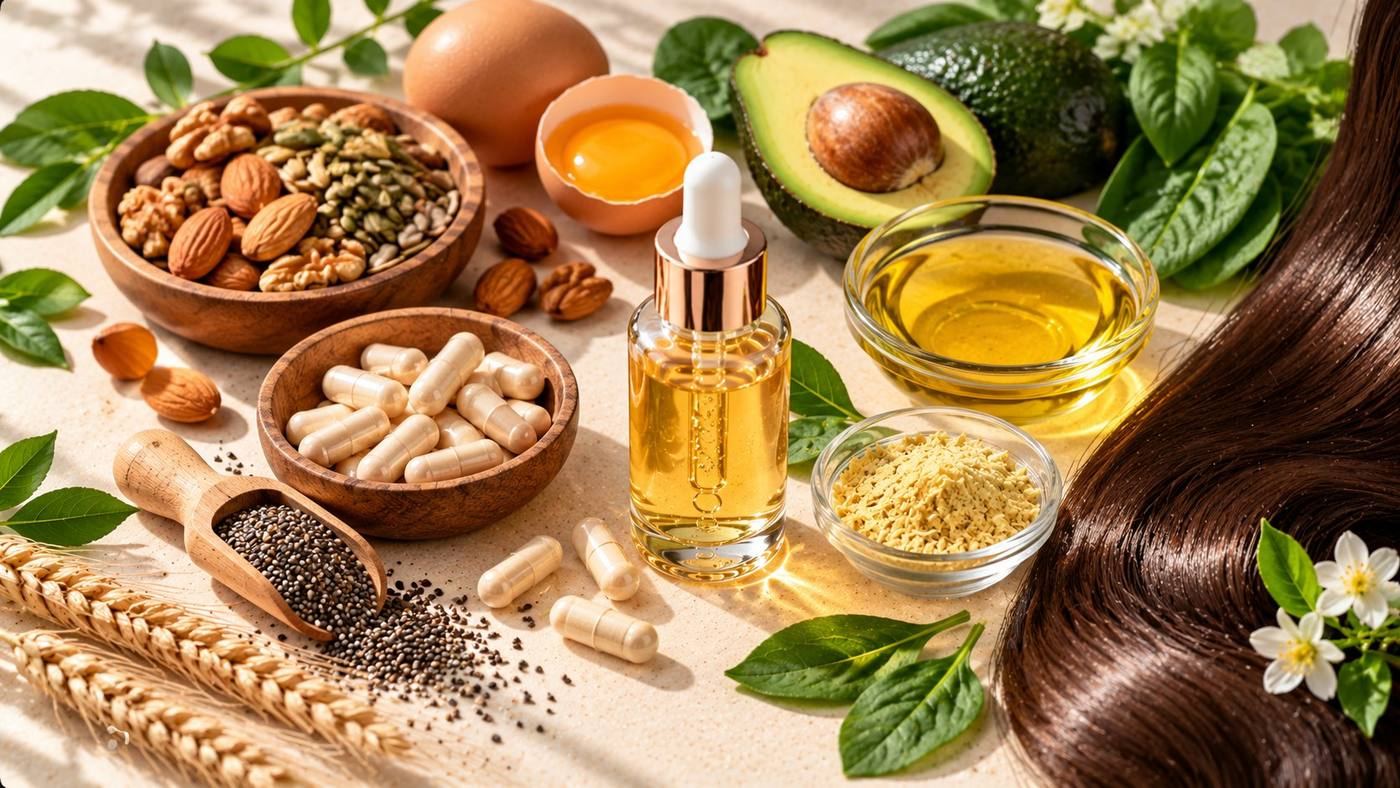
Biotin is a B vitamin the body needs as a helper for enzymes. A normal diet supplies enough for most people. It is mainly sold as an oral supplement for hair, skin and nails. This page covers oral use, where almost all the evidence sits; no good evidence was found for biotin applied to the scalp.
02What it does
Biotin deficiency can cause hair loss, and correcting it helps. In people with normal levels, reviews find no consistent benefit for hair growth or hair fall. Very high doses can interfere with common blood tests, including heart attack tests.
03The evidence
Studies below were checked against the publisher, DOI or journal record on 26 Sep 2026. We list design and size so you can judge the strength of each result.
| Study | Design | Who and how long | What it found |
|---|---|---|---|
| Moltó-Balado et al. 2026, Dermato (MDPI) Source | Systematic review | 10 studies of biotin in people with hair loss | Biotin alone did not consistently improve objective hair growth; gains were seen mainly in multi-ingredient products, and most studies had moderate to high risk of bias. |
| Yelich et al. 2024, Journal of Clinical and Aesthetic Dermatology Source | Systematic review | 3 eligible studies, including a 1966 double-blind placebo-controlled trial | No difference in hair growth versus placebo in the controlled trial; the authors conclude high-quality studies do not support biotin for hair. |
| Patel et al. 2017, Skin Appendage Disorders (Karger) Source | Literature review | 18 reported cases of biotin use for hair or nail problems | Every case that improved had an underlying cause such as deficiency or a rare condition; no evidence in healthy people. |
| Trüeb 2018, Skin Appendage Disorders (Karger) Source | Commentary | Cites a study of 541 women with hair complaints (funded by a biotin maker) | Argues low biotin is common in such patients and should be tested; supports 5 mg a day only when deficiency is confirmed. |
Biotin helps hair only when someone is deficient, which is uncommon. For everyone else there is no good evidence of benefit. Brands should not claim that biotin reduces hair fall or thickens hair unless the finished product is tested, and supplement brands should warn about lab-test interference.
04How CSL formulation scientists use it
- Oral supplements are regulated as foods or food supplements, not cosmetics; CSL regulatory specialists advise on the right route for each market.
- In topical products biotin can be included as a conditioning or label ingredient, but it should not carry the performance claim.
- Build hair fall claims on better-studied actives such as caffeine, and test the finished formula.
- For supplements, include a clear note to tell a doctor or laboratory about biotin use before blood tests.
05Regulatory and claims
In December 2017 the US FDA warned that high-dose biotin can cause falsely high or low results in some lab tests, including falsely low troponin results that can miss a heart attack; it noted hair, skin and nail supplements can contain up to 650 times the recommended intake, and it updated the warning in November 2019. Supplement rules differ by market, and CSL regulatory specialists confirm permitted doses and warning wording. Claims such as 'stops hair loss' or 'regrows hair' are medical and not allowed.
06Questions brands ask
Does biotin stop hair fall?
Only if the hair fall is caused by biotin deficiency, which is uncommon. Reviews find no consistent benefit in people with normal levels.
Does biotin in shampoo work?
No good published evidence was found for biotin applied to the scalp. Any claim would need a test of the finished product.
Is high-dose biotin safe?
Serious side effects are rare, but high doses can distort common blood tests. The US FDA has warned about falsely low heart test results, including one death.
07References
- Moltó-Balado P, Simeó-Monzo A, del Barrio-Gonzalez A. Effectiveness of biotin supplementation for hair growth in patients with alopecia: a systematic review. Dermato. 2026;6(2):17. Link
- Yelich A, Jenkins H, Holt S, Miller R. Biotin for hair loss: teasing out the evidence. J Clin Aesthet Dermatol. 2024;17(8):56–61. Link
- Patel DP, Swink SM, Castelo-Soccio L. A review of the use of biotin for hair loss. Skin Appendage Disord. 2017;3(3):166–169. Link
- Trüeb RM. Comment on the use of biotin for hair loss. Skin Appendage Disord. 2018;4(4):345–346. Link
- US Food and Drug Administration. Biotin interference with troponin lab tests: assays subject to biotin interference (safety communication 2017, updated 2019). Link
Used in: Hair fall & hair growth
Update log
- Evidence reviewed and page published by CSL scientists
This page summarises published research for brands and formulators. It is general information, not medical advice, and results in studies depend on the full formula tested.