Cosmetic clays: what the evidence shows for oil control and masks
Kaolin, bentonite and other clays soak up surface oil and give masks their texture. CSL formulation scientists explain what human studies show, why the effect is short-lived and why raw-material purity matters.
By CSL Formulation team · Evidence checked by CSL scientists
At a glance
- What it is
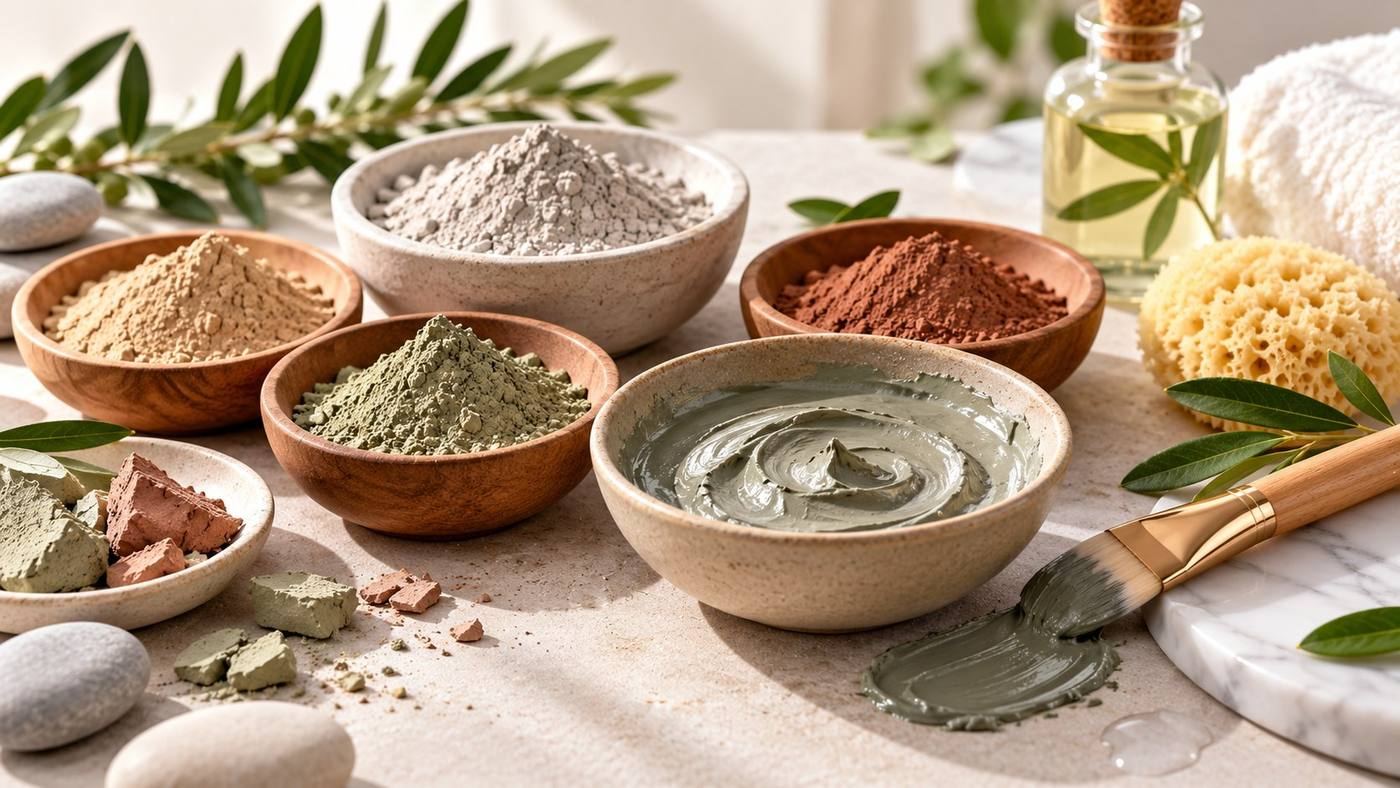
- Natural mineral powders such as kaolin, bentonite (montmorillonite), illite (green clay) and rhassoul, often used with silica to absorb oil
- Main benefits
- Less visible shine straight after use, a cleaner-feeling and matter-looking skin, mask and cleanser texture
- Levels tested in trials
- Up to 21% total clay (7% each of three clays) in one mask study; most studies test whole products with undisclosed levels
- Time to results
- Immediate for shine; 4 to 8 weeks for blemish-related results in small studies of combination products
- Watch for
- Heavy metals (lead, arsenic), microbial load, dryness, and oil returning within hours
01What is it?
Cosmetic clays are fine mineral powders mined from natural deposits. Kaolin is mild and white; bentonite and montmorillonite are swelling clays that hold water and oil; green clay is usually illite or a mix; rhassoul is a Moroccan clay. Silica is often added alongside them as an oil-absorbing, mattifying powder.
02What it does
Clays have a large surface area and, in swelling clays, layers that can take up water, oils and charged substances. Kaolin also gives a gentle polishing action. On skin this shows mainly as less shine and a fresher feel straight after a mask or cleanser, with oil returning over the following hours.
03The evidence
Studies below were checked against the publisher, DOI or journal record on 26 Sep 2026. We list design and size so you can judge the strength of each result.
| Study | Design | Who and how long | What it found |
|---|---|---|---|
| Salimi et al. 2025, Journal of Cosmetic Dermatology (Wiley) Source | Randomised, placebo-controlled add-on trial, investigator-blinded | 60 people with moderate acne, 8 weeks, nightly 10-minute bentonite mask with 10% Alcea sulphurea extract, plus oral azithromycin in both groups | Lesion count fell 55% and acne severity 66% with the mask, a significantly bigger fall than with placebo. The clay and plant extract were tested together, so the clay's own effect is unclear. |
| Sarruf et al. 2025, Cosmetics (MDPI) Source | Controlled, randomised-site study with placebo formula, plus mineral and heavy-metal analysis | 20 adults, single 2-hour application, masks with red, green and black clay at low level or 7% each (21% total) | All clay masks cut skin oiliness versus control, most at the higher level, but oil rebounded above baseline within hours. No change in firmness or elasticity. The black clay exceeded the US arsenic limit for colour additives. |
| Zhang et al. 2023, Skin Research and Technology (Wiley) Source | Open-label study, no control group, industry-funded | Adults with oily skin and mild to moderate acne, 4 weeks, kaolin and bentonite mask with 5% panthenol twice weekly (45 in the clinical group) | Sebum fell 69% straight after use and stayed 24–30% lower; open comedones fell 66% and closed comedones 46%. Without a comparison group these gains cannot be firmly credited to the mask. |
| Meier et al. 2012, Forschende Komplementärmedizin (Karger) Source | Prospective observational pilot study, no control group | 194 adults (133 fully assessed) with lesioned skin or mild acne, 6 weeks, clay and jojoba oil mask 2–3 times a week | Total skin lesions fell 54% and quality-of-life scores improved, but the design cannot separate the mask's effect from natural change. |
| Viseras et al. 2021, Clays and Clay Minerals (Springer Nature) Source | Narrative review | Clay minerals across cosmetic and personal-care products | Talc, kaolinite, mica and smectites are the main cosmetic clays; kaolinite and mica give mild abrasion, smectites exchange ions, take up impurities and thicken formulas. Ingredient names follow trade use rather than strict mineralogy. |
Clays reliably reduce visible shine for a few hours, which supports claims such as "absorbs excess oil" and "leaves skin looking matte". Longer-term blemish results come from small or uncontrolled studies of products that also contain other actives, so claims about blemishes should be modest and backed by testing of the finished product.
04How CSL formulation scientists use it
- Kaolin suits gentle masks and cleansers; bentonite and other smectites swell, thicken and absorb more oil but can feel more drying. CSL formulation scientists balance clay type and level with humectants and emollients so skin does not feel tight.
- Raw-material purity is the main safety issue. Natural clays can carry lead, arsenic, mercury and other metals, and crystalline silica or asbestos fibres can occur in some mineral deposits, so each lot is bought to specification with certificates of analysis and, where needed, independent testing.
- Clays come from the ground and can carry high microbial counts. Treated (for example heat-treated or irradiated) grades, microbial limits on the raw material and a robust preservative system are needed, especially in water-based masks.
- For powder formats such as dry shampoo or setting powders, CSL formulation scientists control particle size and dust, and favour amorphous silica grades for mattifying and oil absorption.
05Regulatory and claims
Kaolin, bentonite and silica are widely used cosmetic ingredients, but contaminants drive their regulation. The US FDA recommends no more than 10 ppm lead in externally applied cosmetics (draft guidance), and in 2016 it warned consumers not to use a bentonite clay product found to contain 37.5 ppm lead. A US proposed rule on asbestos testing of talc-containing cosmetics, required under MoCRA, was withdrawn in November 2025, with a new proposal promised. CSL regulatory specialists confirm limits for each target market, and keep claims cosmetic: "absorbs excess oil", not "treats acne".
06Questions brands ask
Do clay masks shrink pores or control oil long term?
Not on current evidence. Studies show less oil straight after use, but levels return within hours. Pores can look less noticeable while the skin is less oily.
Which clay is best for oily skin?
Swelling clays such as bentonite absorb more oil than kaolin but can be more drying. Many products blend them to balance oil control and comfort.
Are natural clays safe?
They can be, if the raw material is tested. Clays can contain heavy metals and microbes, and one 2025 study found arsenic above the US colour-additive limit in a black clay. Supplier testing and specifications are essential.
07References
- Salimi S, Fakhri M, Saeedi M, et al. The therapeutic effects of a bentonite-based facial mask with Alcea sulphurea extract on acne severity and patient experience: add-on randomized controlled clinical trial. J Cosmet Dermatol. 2025;24:e70586. Link
- Sarruf FD, Issa MG, Velasco MVR, Rosado C, Baby AR. Clay-based cosmetic formulations: mineralogical properties and short-term effects on sebum regulation and skin biomechanics. Cosmetics (MDPI). 2025;12(5):219. Link
- Zhang X, Zhang Z, Tao H, et al. Comprehensive assessment of the efficacy and safety of a clay mask in oily and acne skin. Skin Res Technol. 2023;29(11):e13513. Link
- Meier L, Stange R, Michalsen A, Uehleke B. Clay jojoba oil facial mask for lesioned skin and mild acne: results of a prospective, observational pilot study. Forsch Komplementmed. 2012;19(2):75–79. Link
- Viseras C, Sánchez-Espejo R, Palumbo R, et al. Clays in cosmetics and personal-care products. Clays Clay Miner. 2021;69:561–575. Link
- US FDA. Lead in cosmetics (including draft guidance: Lead in cosmetic lip products and externally applied cosmetics: recommended maximum level). Link
- US FDA. Testing methods for detecting and identifying asbestos in talc-containing cosmetic products; withdrawal. Federal Register. 28 November 2025. Link
- STAT News. 'Detox' bentonite clay has high levels of lead, FDA says. 2 February 2016 (report of FDA warning on Bentonite Me Baby). Link
Used in: Acne & oil control
Update log
- Evidence reviewed and page published by CSL scientists
This page summarises published research for brands and formulators. It is general information, not medical advice, and results in studies depend on the full formula tested.