Kojic acid: what the evidence shows for dark spots and uneven tone
Kojic acid is a long-used brightening active with small trials and a new EU limit of 1%. CSL formulation scientists explain what the evidence supports and how to keep it stable.
By CSL Formulation team · Evidence checked by CSL scientists
At a glance
- What it is
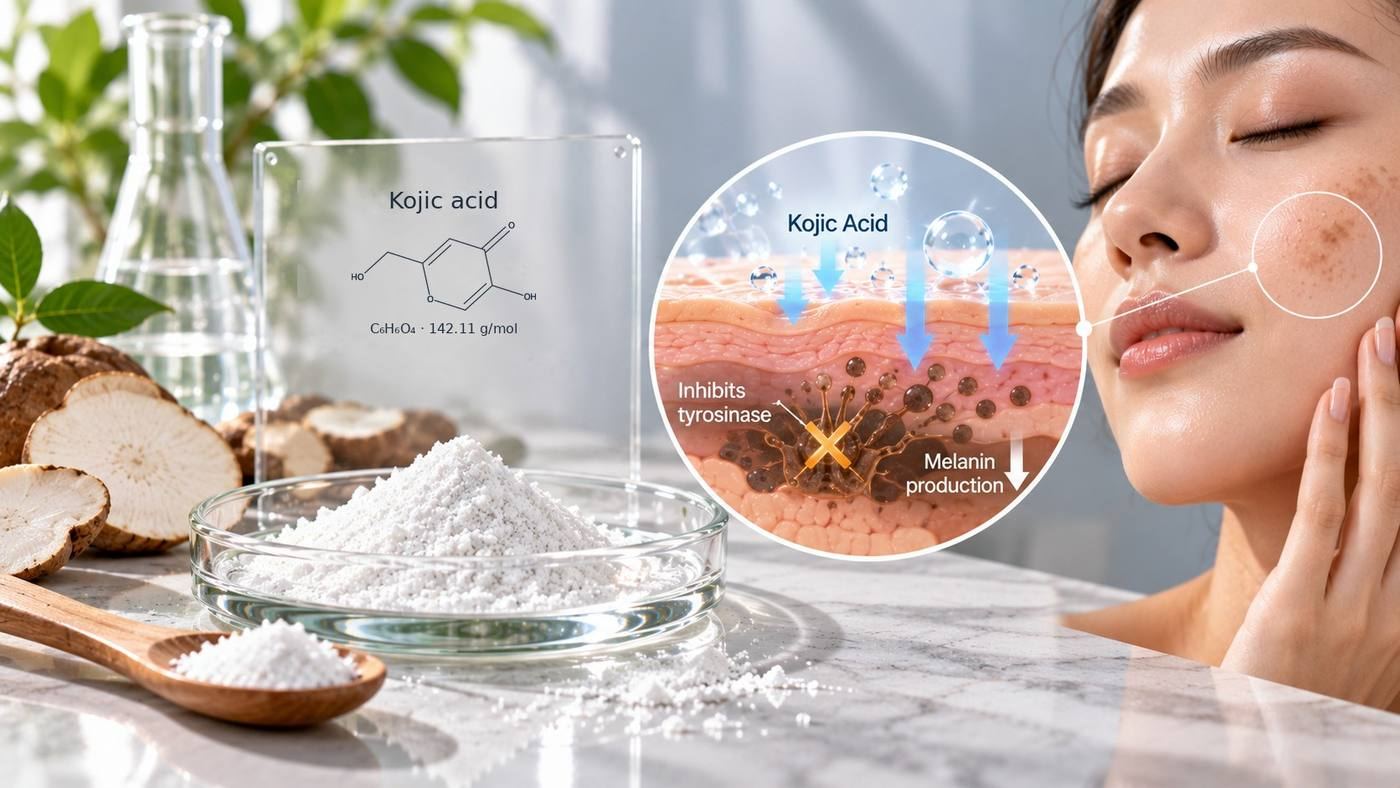
- A natural tyrosinase inhibitor made by fungi during fermentation (for example in rice for sake); also used as the oil-soluble ester kojic dipalmitate
- Main benefits
- Lighter-looking dark spots and a more even-looking tone, usually as part of a combination
- Levels tested in trials
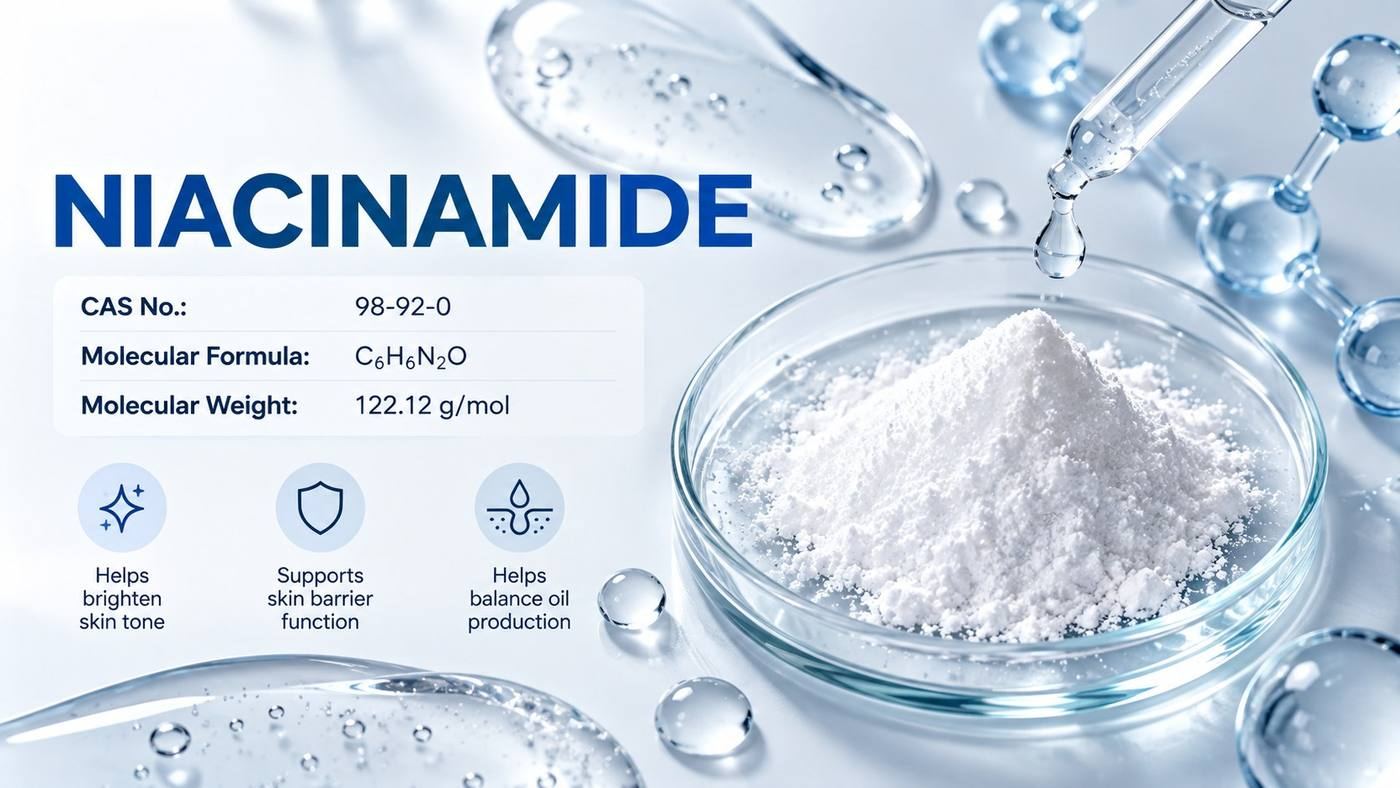
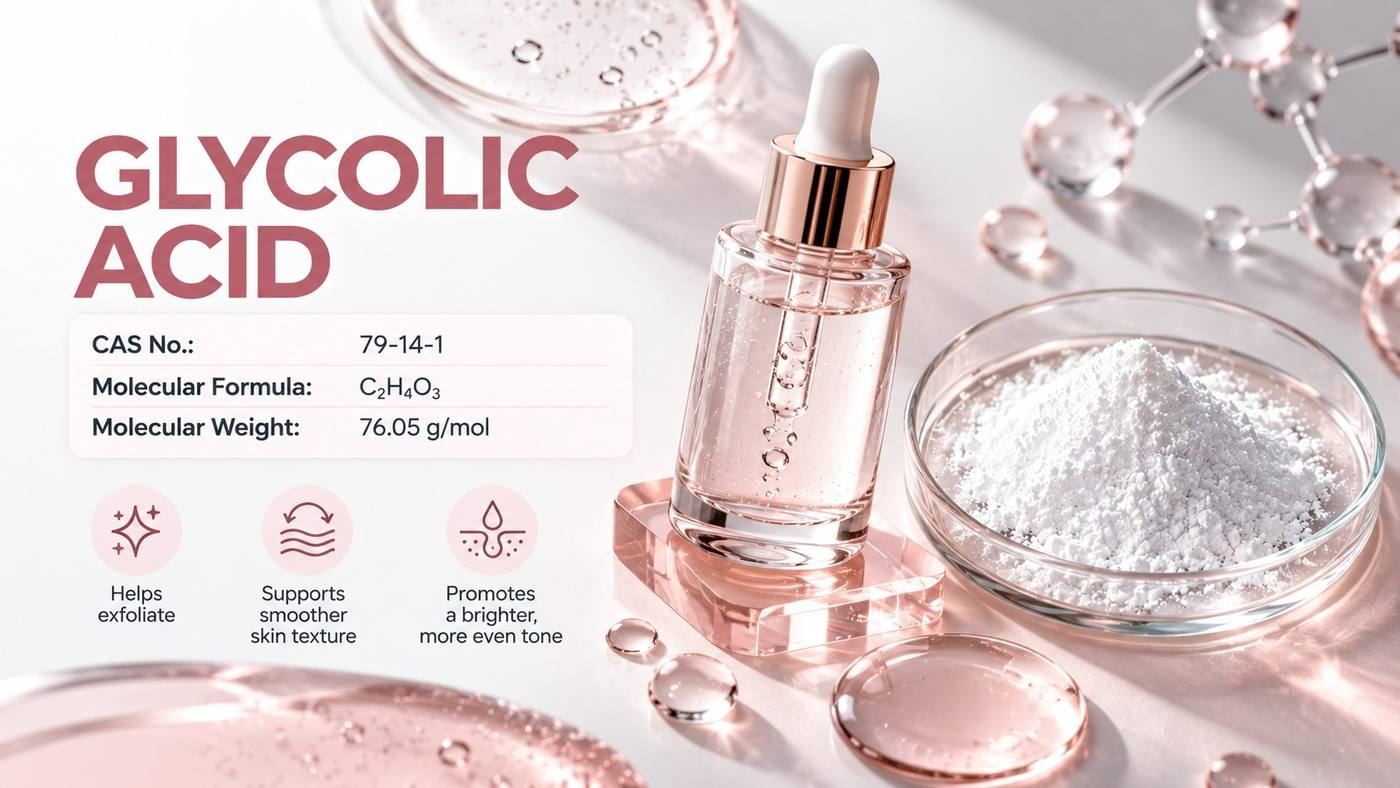
- 0.75% to 4% in clinical studies, mostly 2%; often combined with arbutin, niacinamide, vitamin C or glycolic acid
- Time to results
- 8 to 16 weeks in controlled studies
- Watch for
- EU maximum of 1% in face and hand products; contact allergy; browning and colour change in the pack
01What is it?
Kojic acid is a small molecule produced by fungi such as Aspergillus during fermentation. It has been used in skin-lightening cosmetics for decades, especially in Asia. Kojic dipalmitate is an ester that is more stable and oil-soluble, but it has very little published clinical data of its own.
02What it does
Kojic acid binds copper in tyrosinase, the enzyme that starts melanin production, so less pigment is made. Over two to four months this can show as lighter-looking dark spots and a more even-looking tone. In most trials it is combined with other brightening actives, so its own share of the effect is hard to separate.
03The evidence
Studies below were checked against the publisher, DOI or journal record on 26 Sep 2026. We list design and size so you can judge the strength of each result.
| Study | Design | Who and how long | What it found |
|---|---|---|---|
| Tantanasrigul et al. 2025, Journal of Cosmetic Dermatology (Wiley) Source | Split-face, evaluator-blinded randomised pilot trial against triple combination cream | 27 adults with melasma in Thailand, 12 weeks plus 4-week follow-up, cosmetic cream with 5% alpha-arbutin and 2% kojic acid twice daily vs hydroquinone 4%, tretinoin and fluocinolone nightly | Melasma score (mMASI 2.19 vs 1.87) and melanin index at week 12 did not differ significantly between sides; the arbutin–kojic side had fewer side effects and less relapse at week 16. |
| Patil et al. 2025, Cureus (Springer Nature) Source | Randomised, open-label comparative trial | 72 Indian women with melasma (70 completed), 16 weeks, 2% kojic acid cream vs 5% cysteamine cream | Melasma score fell 10% with kojic acid and 12% with cysteamine, not significantly different; pigment readings fell about 5% in both. No side effects reported. |
| Hindritiani et al. 2023, Berkala Ilmu Kesehatan Kulit dan Kelamin (Universitas Airlangga, open access) Source | Randomised, double-blind split-face trial against 4% hydroquinone | 13 women with epidermal melasma, 8 weeks, cream with 4% niacinamide and 4% kojic acid | Both sides improved significantly with no difference between them; no side effects on the niacinamide–kojic side vs itching or mild redness in 23% on the hydroquinone side. Very small study. |
| Wawrzyk-Bochenek et al. 2023, Journal of Clinical Medicine (MDPI) Source | Preliminary before-and-after study, no control group | 12 women, skin types II–III, with marks after acne, 4–6 in-clinic applications of 3% kojic acid solution two weeks apart | Skin brightness rose in 75% and spot contrast fell in about 83% on imaging. Weak evidence: tiny, uncontrolled and not a home-use product. |
| Monteiro et al. 2013, Indian Journal of Dermatology (Wolters Kluwer Medknow) Source | Comparative trial against 4% hydroquinone | 60 people with facial melasma, 12 weeks, 0.75% kojic acid cream containing vitamin C vs 4% hydroquinone cream nightly | Hydroquinone worked faster and gave greater overall improvement in melasma score than the kojic acid cream. |
Kojic acid gives a real but modest brightening effect, and in recent small trials combination formulas with it performed close to stronger comparators with fewer side effects. It is less effective than hydroquinone on its own, and most data come from mixed formulas, so claims should stay modest, such as “reduces the look of dark spots” and “evens the look of skin tone”, supported by testing of the finished product at the level used.
04How CSL formulation scientists use it
- For the EU, CSL formulation scientists design face and hand products at or below 1% kojic acid; many trials used 2–4%, so efficacy at 1% should be shown on the finished product rather than borrowed from those studies.
- Kojic acid tends to discolour (yellow to brown) with light, heat and trace metals such as iron. Chelating agents, antioxidants, opaque or airless packs and real-time stability testing help keep colour and activity.
- It works best alongside actives that act at other steps of pigmentation, such as niacinamide, arbutin, tranexamic acid or vitamin C, together with daily sun protection.
- Kojic acid can cause contact allergy. CSL formulation scientists include sensitisation testing (for example, an HRIPT) and avoid positioning it for use straight after peels or on damaged skin, where the SCCS did not consider it safe. Kojic dipalmitate is more stable but has little clinical data and no SCCS safety conclusion.
05Regulatory and claims
In the EU, Commission Regulation (EU) 2024/996 added kojic acid to Annex III of the Cosmetics Regulation (entry 375): maximum 1% in face and hand products. Non-compliant products could not be placed on the EU market from 1 February 2025 or made available from 1 November 2025. This follows SCCS opinions (SCCS/1481/12 and SCCS/1637/21) finding kojic acid safe up to 1% as a skin-lightening agent in leave-on face and hand products; the SCCS drew no conclusion on derivatives such as kojic dipalmitate. For other markets, including ASEAN, CSL regulatory specialists confirm the status in each target market, and claims stay cosmetic: “brighter, more even-looking skin”, not “treats melasma”.
06Questions brands ask
Is kojic acid as effective as hydroquinone?
Not on its own. A 12-week comparison found 4% hydroquinone worked faster and better than a 0.75% kojic acid cream. Recent small trials of kojic acid combined with arbutin or niacinamide came close, with fewer side effects.
Can a product sold in the EU contain more than 1% kojic acid?
No, not in face and hand products. Since 2025 EU law caps kojic acid at 1% in these products, and non-compliant stock had to leave the market by 1 November 2025.
Is kojic dipalmitate a good substitute?
It is easier to keep stable and suits oil-based formats, but there are very few published human trials of it, and the SCCS reached no safety conclusion on it. Any claims need testing of the finished product.
07References
- Tantanasrigul P, Sripha A, Chongmelaxme B. The efficacy of topical cosmetic containing alpha-arbutin 5% and kojic acid 2% compared with triple combination cream for the treatment of melasma: a split-face, evaluator-blinded randomized pilot study. J Cosmet Dermatol. 2025 (published online 18 November 2024). Link
- Patil et al. Comparison of the effectiveness and safety of 5% cysteamine and 2% kojic acid creams in the treatment of melasma in Indian adult females. Cureus. 2025;17(3):e81330. Link
- Hindritiani R, Nazlia F, Octavia N, Rizqandaru T, Puspitosari D, Ruchiatan K. A split-face comparative study in efficacy and safety between the combination of 4% niacinamide and 4% kojic acid cream versus 4% hydroquinone cream for epidermal melasma. Berkala Ilmu Kesehatan Kulit dan Kelamin. 2023;35(2):93–99. Link
- Wawrzyk-Bochenek I, Rahnama M, Stachura M, Wilczyński S, Wawrzyk A. Evaluation of the reduction of skin hyperpigmentation changes under the influence of a preparation containing kojic acid using hyperspectral imaging: preliminary study. J Clin Med. 2023;12(7):2710. Link
- Monteiro RC, Kishore BN, Bhat RM, Sukumar D, Martis J, Ganesh HK. A comparative study of the efficacy of 4% hydroquinone vs 0.75% kojic acid cream in the treatment of facial melasma. Indian J Dermatol. 2013;58(2):157. Link
- Commission Regulation (EU) 2024/996 of 3 April 2024 amending Regulation (EC) No 1223/2009 (Annex III entry 375, kojic acid, max 1% in face and hand products). Official Journal of the European Union. 2024. Link
- Scientific Committee on Consumer Safety. Opinion on kojic acid. SCCS/1637/21, final version adopted 15–16 March 2022, corrigendum 10 June 2022. Link
- Scientific Committee on Consumer Safety. Opinion on kojic acid. SCCS/1481/12, adopted 26–27 June 2012. Link
Used in: Hyperpigmentation & even tone
Update log
- Evidence reviewed and page published by CSL scientists
This page summarises published research for brands and formulators. It is general information, not medical advice, and results in studies depend on the full formula tested.