Is cetearyl alcohol bad? Fatty alcohols vs drying alcohols
Cetearyl alcohol is a fatty alcohol, not a drying one. How it differs from alcohol denat, how it holds creams together, and what patch-test data show about allergy.
By CSL Formulation science team, Cosmetic Science Lab · Reviewed by Dr. Premalatha, Ph.D., Life Science, Regulatory Consultant
Quick answer
- Is cetearyl alcohol bad? No. Cetearyl alcohol is a fatty alcohol, not a drying one. It is a waxy blend of cetyl and stearyl alcohol that softens skin, thickens creams and keeps emulsions stable.
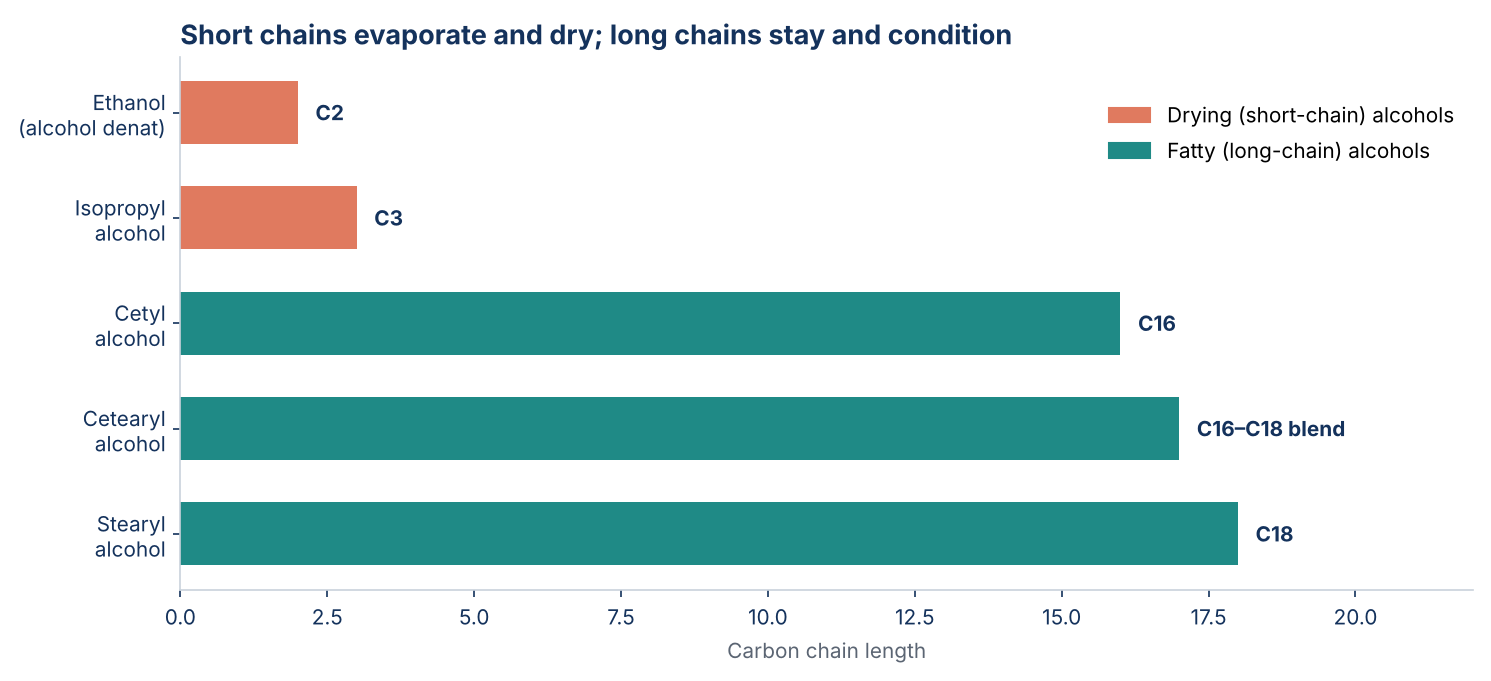
- Fatty alcohols have 16–18 carbons and condition skin; drying alcohols such as ethanol have 2–3 carbons and evaporate.
- Allergy is rare: in 748 adults patch-tested at a contact-allergy clinic, only one (0.1%) reacted to cetearyl alcohol [2].
- Removing it from a cream usually thins the texture and weakens stability.
Take-home message for formulators
- Treat cetearyl alcohol as a structuring co-emulsifier, not a filler
- The C16/C18 blend builds a more robust gel network than cetyl alcohol alone
- Re-run stability and sensory tests if you take it out
Take-home message for brand owners
- "Alcohol-free" claims should not target fatty alcohols
- Allergy to it is rare, even in people with suspected contact allergy
- Specify certified palm or coconut grades if sourcing claims matter
01Fatty alcohols vs drying alcohols
"Alcohol" on an ingredient list covers two very different chemical structures. Short-chain alcohols such as ethanol (listed as alcohol denat) and isopropyl alcohol are volatile liquids; at high levels they can strip surface lipids and leave skin feeling tight. Fatty alcohols have long carbon chains, so they are waxy solids that stay on skin as emollients.
| Cetearyl, cetyl and stearyl alcohol | Alcohol denat and isopropyl alcohol | |
|---|---|---|
| Chain length | 16–18 carbons (fatty) | 2–3 carbons (short-chain) |
| Form | Waxy solid flakes | Volatile liquid |
| Main role | Emollient, thickener, co-emulsifier | Solvent, quick-dry finish |
| Effect on skin | Softens and helps reduce water loss | Can dry or irritate at high levels |
| Typical source | Palm or coconut oil, or synthetic | Fermentation or petrochemical |
02How cetearyl alcohol stabilises creams: the lamellar gel network
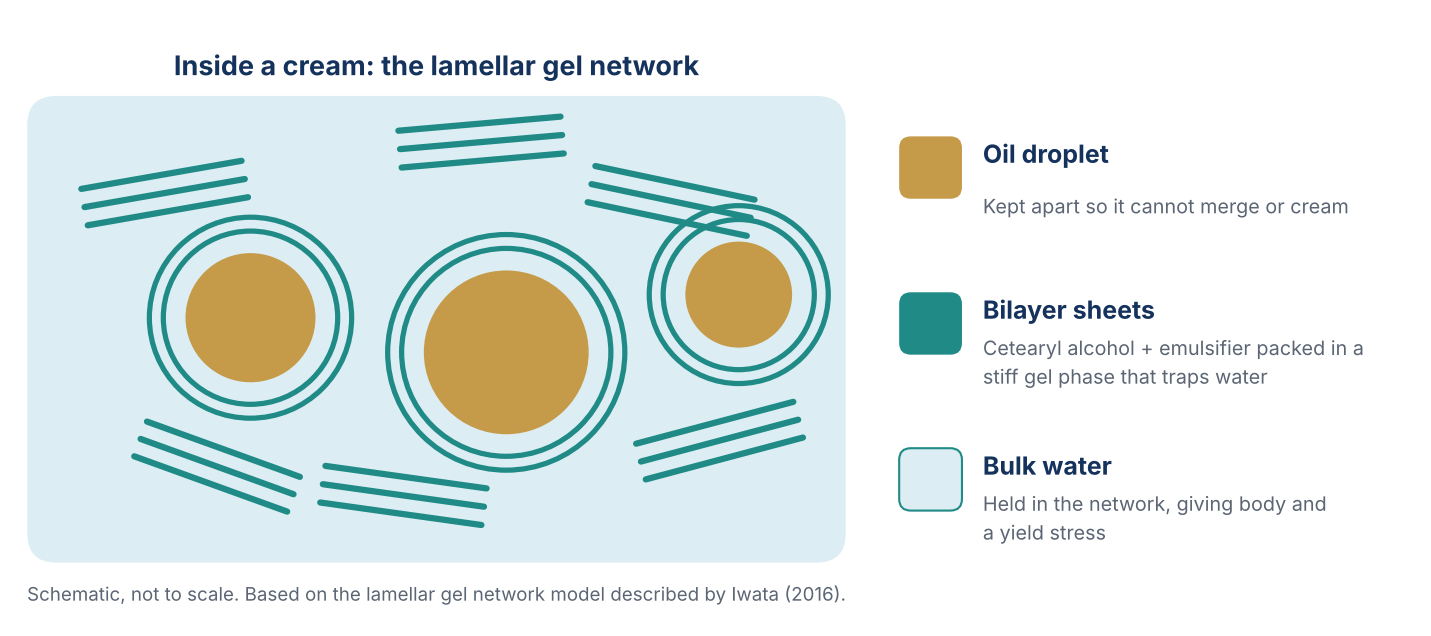
In a cream, cetearyl alcohol acts as a co-emulsifier alongside the main emulsifier. Below its melting point, the two molecules pack into stiff bilayers called a lamellar gel network. These bilayers trap water and wrap around oil droplets, so the droplets cannot merge or float to the top [1].
The cetyl-stearyl blend matters. Iwata reports that cetyl or stearyl alcohol on its own gives low viscosity and phase separation, while the mixed cetostearyl chains keep the gel phase and stabilise the emulsion [1]. The result is high viscosity at rest, easy spreading when rubbed, and long-term stability. For the wider picture, read what an emulsion is and why creams separate.
03What the patch-test data show
| Design | Single-centre consecutive patch testing with the European baseline series plus 10 added allergens |
| Sample | 748 consecutive adults referred for patch testing |
| Test concentration | Cetearyl alcohol 20% in petrolatum |
| Allergen of interest | Cetearyl alcohol, one of the 10 additions |
| Result | 1 of 748 positive (0.1%), a weak reaction |
Only 1 of 748 patients (0.1%) had a positive reaction to cetearyl alcohol, below the 0.5% prevalence the authors use as the bar for adding an allergen to the baseline series [2]. That is a low contact allergy rate in a group already suspected of having allergic reactions. The limits matter: it is one clinic, patients were referred for suspected allergy rather than drawn from the general population, and patch testing detects allergy, not irritation or breakouts.
Older work points the same way. When Tosti and colleagues tested five fatty alcohols in 146 patients with suspected cosmetic dermatitis, 33 of the 39 positive reactions were to oleyl alcohol, a different fatty alcohol [3]. Genuine cetyl alcohol allergy does occur, but it appears mainly in case reports [4]. The US Cosmetic Ingredient Review panel concluded that cetearyl and cetyl alcohol are safe as cosmetic ingredients in present practices of use [5].
04Comedogenicity and sensitive skin
Comedogenicity ratings for fatty alcohols that circulate online mostly come from animal tests of raw ingredients. When finished products were tested on people, formulas containing "comedogenic" ingredients were not necessarily comedogenic [6], so judge the finished formula, not the ingredient list. Look at concentration and context, not just the word "alcohol". People with a confirmed allergy should avoid cetyl, stearyl and cetearyl alcohol together, since they share the same chains.
05For brands and formulators: use levels and stability
| Product | Typical level | Main job |
|---|---|---|
| Light lotions | 0.5–2% | Stabiliser and co-emulsifier |
| Everyday creams | 2–5% | Body and texture |
| Rich creams, rinse-off conditioners | Up to about 10% | Structure, cushion, slip |
Iwata reports that a surfactant-to-fatty-alcohol molar ratio of about 1:3 is generally considered good [1]. Our lotion formula uses 2% cetearyl alcohol alongside a glyceryl stearate emulsifier.
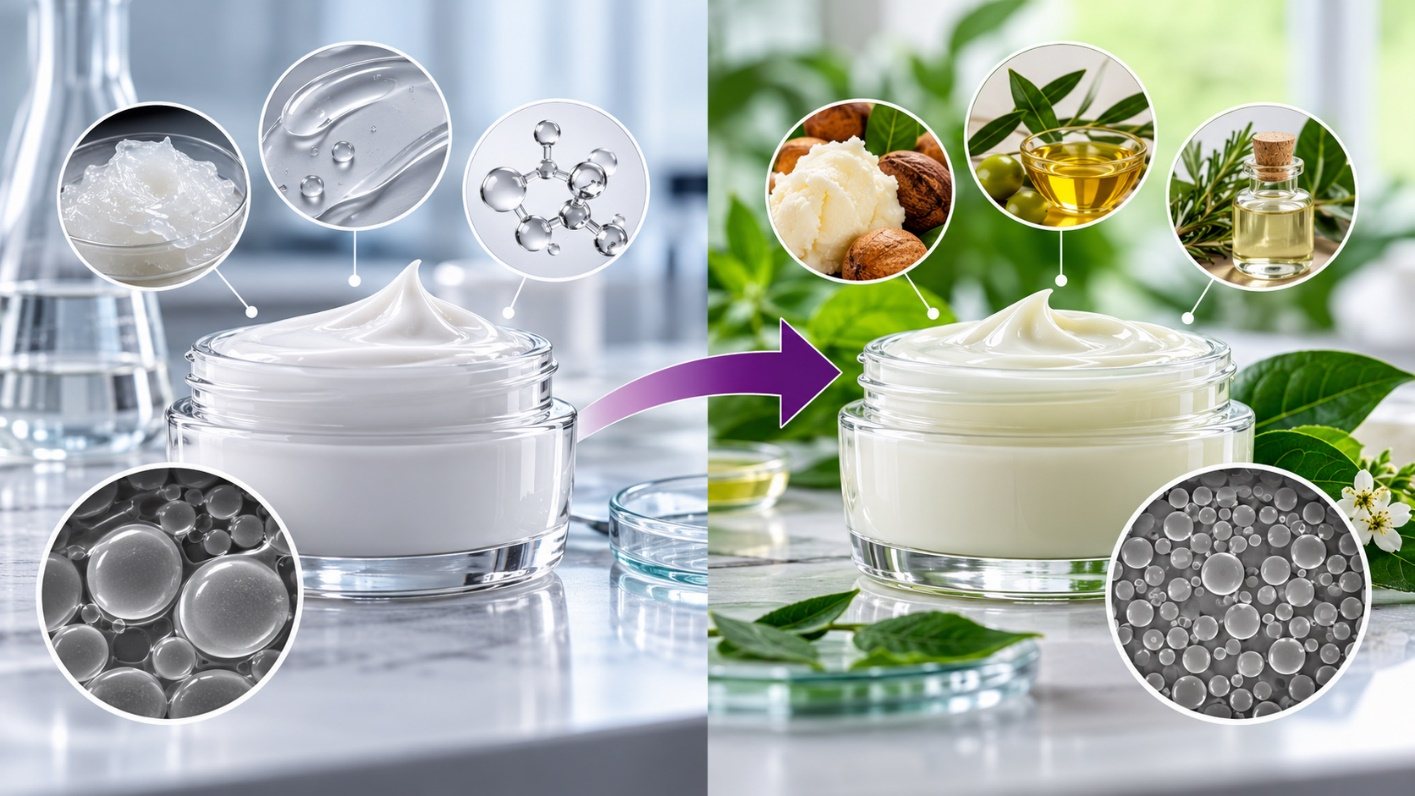
Taking cetearyl alcohol out of a "clean beauty" reformulation usually drops viscosity sharply and removes the yield stress that holds droplets apart. Expect thinner texture, creaming or water separation over time. Polymers such as xanthan gum can restore thickness, but not the same cushioned feel, so re-run stability testing and any sensory testing behind texture claims.
Sourcing. Most cetearyl alcohol comes from palm or coconut oil. If sustainability claims matter to your customers, specify certified palm or coconut-derived grades; the INCI name stays the same. See our skin care sector page for category expectations.
06Questions readers ask
Is cetearyl alcohol drying?
No. It is a long-chain fatty alcohol that stays on the skin as an emollient. The drying alcohols are short-chain ones such as ethanol (alcohol denat) and isopropyl alcohol.
Can a product with cetearyl alcohol be called alcohol-free?
Brands commonly use "alcohol-free" to mean free of ethanol, but the label should not mislead. If you make the claim, define it on pack or in your claim file so consumers are not surprised by "alcohol" in the ingredient list.
Is cetearyl alcohol safe for sensitive skin?
For most people, yes. Allergy is rare even among patients tested for suspected contact allergy. Anyone with a confirmed allergy to cetyl or stearyl alcohol should avoid it.
Does cetearyl alcohol clog pores?
Not in itself. Pore-clogging depends on the whole formula and how much of each ingredient it contains. Human tests of finished products have shown that formulas containing so-called comedogenic ingredients are not necessarily comedogenic.
Is cetearyl alcohol natural or vegan?
It is usually made from plant oils such as palm or coconut, but it is a processed ingredient, not a raw botanical. Plant-derived grades suit vegan products; synthetic grades also exist, so confirm the source with your supplier.
Reformulating without fatty alcohols?
Our formulation scientists can rebuild texture and stability, then test it before launch.
07References
- Iwata T. Overview of lamellar gel network. Acc Mater Surf Res. 2016;1(3):99–129. PDF
- Bizjak M, Adamič K, Bajrović N, et al. Patch testing with the European baseline series and 10 added allergens: single-centre study of 748 patients. Contact Dermatitis. 2022;87(5):439–446. DOI
- Tosti A, Vincenzi C, Guerra L, Andrisano E. Contact dermatitis from fatty alcohols. Contact Dermatitis. 1996;35(5):287–289. DOI
- Aakhus AE, Warshaw EM. Allergic contact dermatitis from cetyl alcohol. Dermatitis. 2011;22(1):56–57. DOI
- Cosmetic Ingredient Review. Final report on the safety assessment of cetearyl alcohol, cetyl alcohol, isostearyl alcohol, myristyl alcohol, and behenyl alcohol. J Am Coll Toxicol. 1988;7(3):359–413. CIR
- Draelos ZD, DiNardo JC. A re-evaluation of the comedogenicity concept. J Am Acad Dermatol. 2006;54(3):507–512. DOI
Update log
- Published by Cosmetic Science Lab
This article is general technical information, not legal, regulatory or medical advice. Confirm requirements for your product and market before launch.