Squalane in skin care: what the evidence shows for soft, supple skin
Squalane is a light, stable oil that mimics a lipid found in skin’s own sebum. Controlled trials of squalane alone are scarce. Here is what is known, and how CSL formulation scientists use it well.
By CSL Formulation team · Evidence checked by CSL scientists
At a glance
- What it is
- A saturated, very stable oil made by hydrogenating squalene; sourced from plants (olive, sugarcane via fermentation) or, historically, shark liver
- Main benefits
- Light, non-greasy emollience; smoother, softer-feeling skin; a stable carrier oil
- Levels tested in trials
- No controlled trial of squalane alone was found; reported cosmetic use ranges up to 96.8% in leave-on products
- Time to results
- Skin feel changes on application; no trial data on longer-term effects of squalane alone
- Watch for
- Thin evidence base, source traceability (shark vs plant) and purity grade
01What is it?
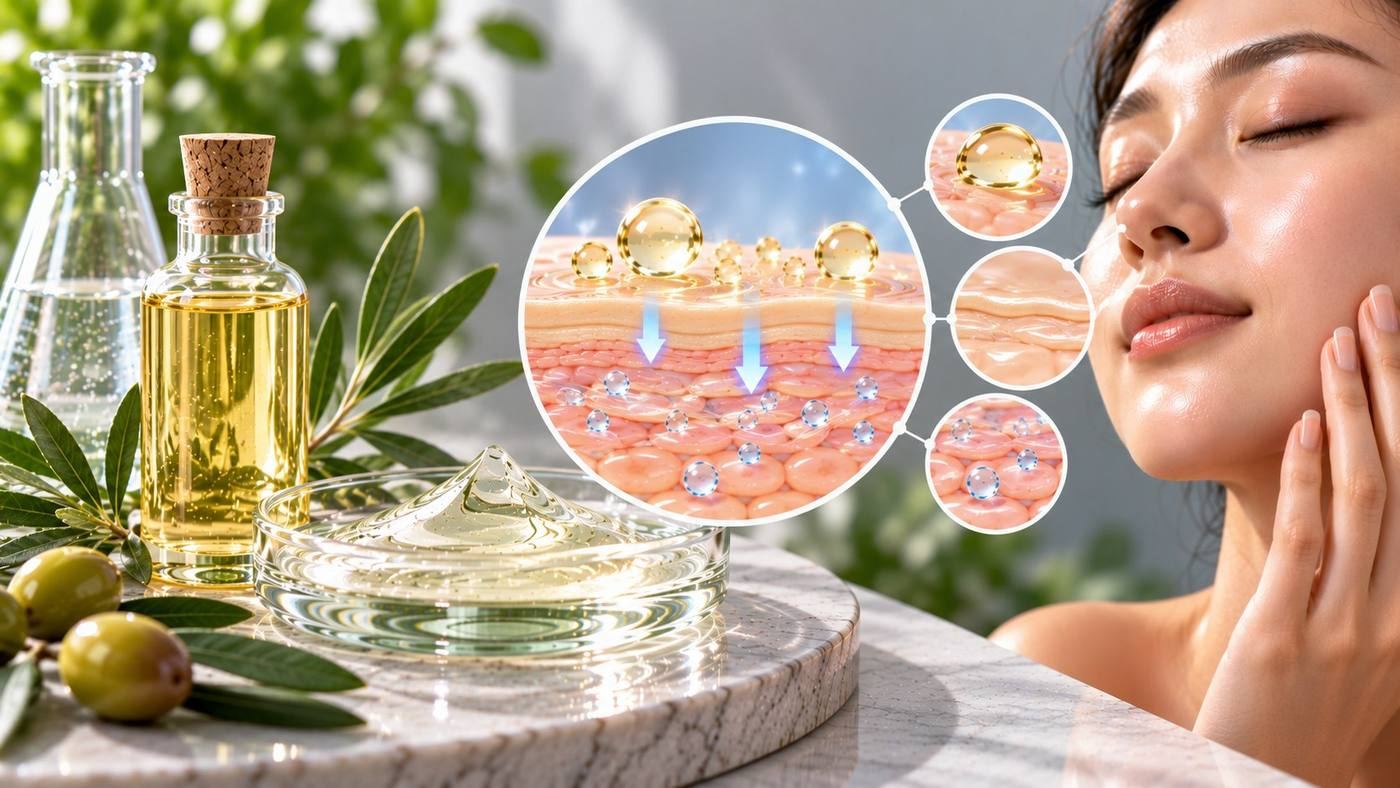
Squalene is an oily lipid made by the skin and found in sebum; it is also found in olive oil and shark liver oil. Squalane is its hydrogenated form, which does not oxidise easily. This stability, its light feel and its good skin tolerance make it a common emollient and carrier oil in cosmetics.
02What it does
Like other emollients, squalane spreads over the skin surface and fills gaps between skin flakes, so skin feels smoother and softer. Lab work suggests it may protect skin cells from UV stress and help hold other actives in the skin, but this has not been shown in controlled human studies.
03The evidence
Studies below were checked against the publisher, DOI or journal record on 26 Sep 2026. We list design and size so you can judge the strength of each result.
| Study | Design | Who and how long | What it found |
|---|---|---|---|
| Cosmetic Ingredient Review 2019 re-review (CIR Expert Panel) Source | Safety assessment including human patch tests | Human data include 600 people patch-tested with a cream containing 7.2% squalane | No contact allergy or irritation; squalane judged safe in current use, reported at up to 96.8% in leave-on products. |
| Rastogi and Gholap 2023, CosmoDerma (Scientific Scholar) Source | Single-arm study, no control group | 47 Indian women, skin types III–IV, 4 weeks, serum with bakuchiol and squalane (levels not stated) | Water loss fell (P < .001) and elasticity rose 11.9%; the effect of squalane cannot be separated from bakuchiol. |
| Wolosik et al. 2025, Molecules (MDPI) Source | Laboratory study (human skin cells, no people) | Human dermal fibroblasts exposed to UVA, 0.005% to 0.015% sugarcane-derived squalane | Squalane partly offset UVA damage (cell viability 64–78% vs 55% with UVA alone); 0.02% and above harmed cells. Lab data only. |
| Oliveira et al. 2022, Colloids and Surfaces B: Biointerfaces (Elsevier) Source | Ex vivo skin study (no people) | Excised skin, water-in-oil squalane emulsion carrying plant polyphenols | Squalane increased how much of the polyphenols stayed in the skin, suggesting it can act as a delivery base. |
| Morgan et al. 2024, Skin Health and Disease (Oxford University Press) Source | Narrative review | Cell, animal and human studies of tocotrienol and squalene | Most support comes from cell and animal work; the human data cited on wrinkles and pigmentation are for oral squalene, not topical use. |
| Huang et al. 2009, Molecules (MDPI) Source | Narrative review | Studies of squalene and related compounds in cosmetic dermatology | Squalene has antioxidant and emollient roles, but the authors call for clinical trials to confirm skin benefits. |
Squalane is a well-tolerated, stable emollient with a strong safety record, but there are no good controlled trials of squalane on its own. Keep claims to what any emollient can support, such as “softens and smooths skin” and “lightweight, non-greasy moisture”, and back them with product-level testing.
04How CSL formulation scientists use it
- Use squalane as a light emollient or carrier oil in serums, creams, balms and cleansing oils; it is used from low levels up to near-neat facial oils.
- Its saturated structure resists oxidation far better than squalene or many plant oils, which helps shelf life. CSL formulation scientists still include antioxidants where other unsaturated oils are present.
- Specify the source and purity on the supplier certificate. Plant- or fermentation-derived squalane lets brands make traceable ‘not from shark’ statements; CSL checks documentation before any sourcing claim.
- For efficacy claims, CSL formulation scientists run in-use tests on the finished product (hydration, water loss, sensory panels) rather than relying on squalane literature.
05Regulatory and claims
The US Cosmetic Ingredient Review Expert Panel concluded in its 2019 re-review that squalane and squalene are safe as cosmetic ingredients in current practices of use and concentration. Deep-sea sharks targeted for liver oil have gained stronger trade protection under CITES, so sourcing documentation matters. CSL regulatory specialists confirm the status in each target market, and claims stay cosmetic, such as “softens skin”.
06Questions brands ask
Is squalane the same as squalene?
No. Squalene is the natural, unsaturated lipid in sebum, olive oil and shark liver. Squalane is its hydrogenated form, which is far more stable and is the form used in most cosmetics.
Does plant squalane work differently from shark squalane?
Once purified, squalane is the same molecule whatever the source. The difference is sustainability and traceability, so ask for source documentation.
Is squalane good for oily or acne-prone skin?
It feels light and is well tolerated, but no controlled trials have tested it on acne-prone skin. Test the finished product rather than relying on the ingredient’s reputation.
07References
- Cosmetic Ingredient Review Expert Panel. Safety assessment of squalane and squalene as used in cosmetics (re-review). Washington, DC: CIR; 2019. Link
- Rastogi R, Gholap A. Daily use of a bakuchiol and squalane-containing face serum impacts skin esthetics. CosmoDerma. 2023;3:182. Link
- Wolosik K, Chalecka M, Gasiewska G, Palka J, Surazynski A. Squalane as a promising agent protecting UV-induced inhibition of collagen biosynthesis and wound healing in human dermal fibroblast. Molecules. 2025;30(9):1964. Link
- Oliveira ALS, Valente D, Moreira HR, Pintado M, Costa P. Effect of squalane-based emulsion on polyphenols skin penetration: ex vivo skin study. Colloids Surf B Biointerfaces. 2022;218:112779. Link
- Morgan NR, Magalingam KB, Radhakrishnan AK, et al. Explicating the multifunctional roles of tocotrienol and squalene in promoting skin health. Skin Health Dis. 2024;4(5):e448. Link
- Huang ZR, Lin YK, Fang JY. Biological and pharmacological activities of squalene and related compounds: potential uses in cosmetic dermatology. Molecules. 2009;14(1):540–554. Link
- Barp L, Miklavčič Višnjevec A, Moret S. Analytical determination of squalene in extra virgin olive oil and olive processing by-products, and its valorization as an ingredient in functional food: a critical review. Molecules. 2024;29(21):5201. Link
Used in: Hydration & barrier repair
Update log
- Evidence reviewed and page published by CSL scientists
This page summarises published research for brands and formulators. It is general information, not medical advice, and results in studies depend on the full formula tested.