Papaya enzyme (papain): gentle exfoliation, and what the evidence does not yet show
Papain is a popular “natural exfoliant”, but controlled human studies on the face are missing. Here is what is known, the allergy risk to manage, and how CSL formulation scientists use it responsibly.
By CSL Formulation team · Evidence checked by CSL scientists
At a glance
- What it is
- Papain, a protein-digesting enzyme from papaya (Carica papaya)
- Main benefits
- Gentle enzymatic exfoliation; smoother-feeling skin
- Levels
- Set by enzyme activity, not by percentage
- Human evidence
- Very limited: no controlled facial trial of papain alone
- Watch for
- Allergy (a known IgE allergen), activity loss in water-based formulas
01What is it?
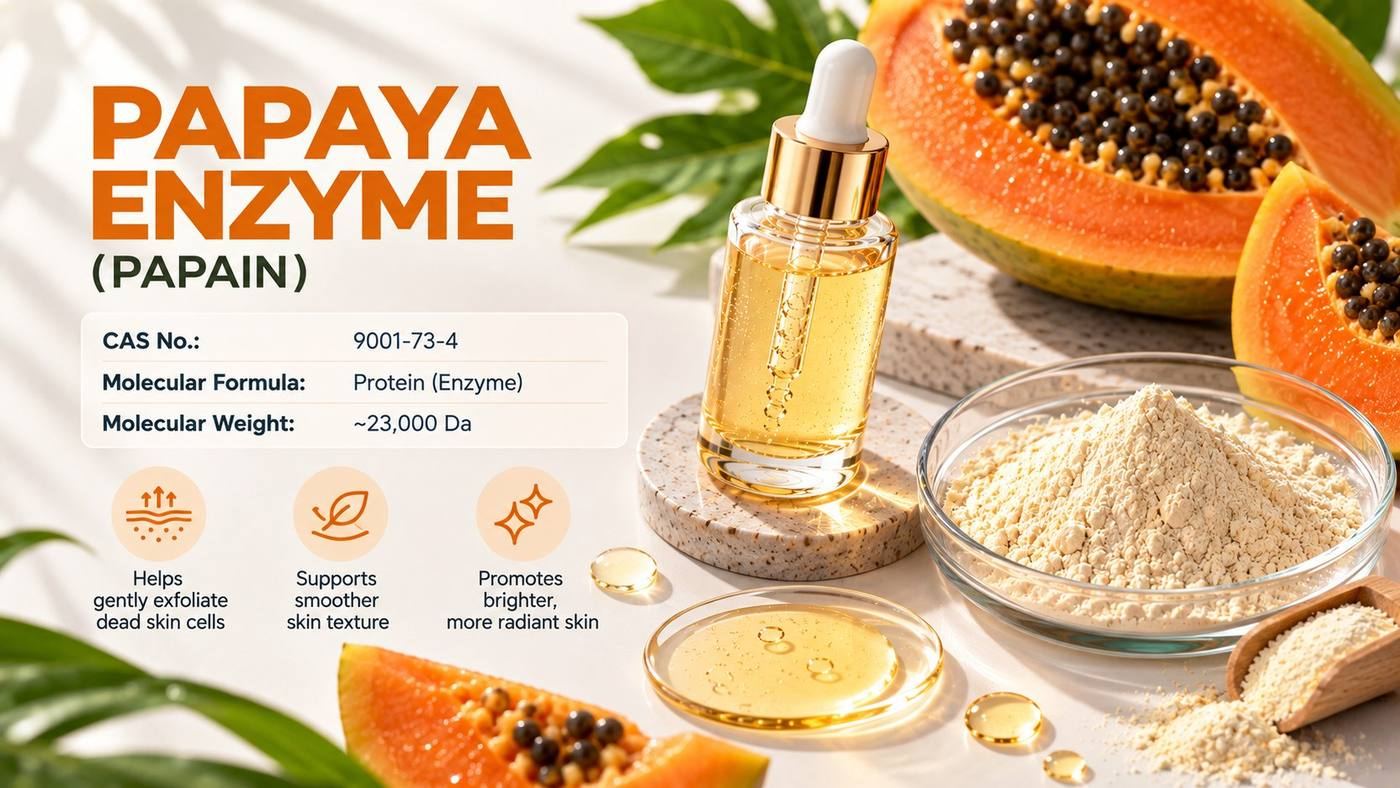
Papain breaks down proteins, including the keratin that holds dead cells together on the skin surface. It is sold as purified papain or as papaya fruit extract, which is not the same thing: plain fruit extract may have little enzyme activity.
02What it does
In the laboratory, papain broke down skin proteins such as keratin and collagen, supporting an exfoliating effect (Trevisol 2022). It needs the right conditions to work and loses much of its activity at skin temperature and acidic pH.
03The evidence
Studies below were checked against the publisher, DOI or journal record on 26 Sep 2026. We list design and size so you can judge the strength of each result.
| Study | Design | Who and how long | What it found |
|---|---|---|---|
| Liu et al. 2026, Journal of Cosmetic Dermatology Source | Randomised, open-label trial | 60 adults with keratosis pilaris, 28 days; scrub with papain plus a lotion vs salicylic acid lotion | Bumps fell in both groups; only the papain-scrub group improved water loss. The physical scrub makes papain’s share unclear. |
| Bouziani et al. 2026, Journal of Cosmetic Dermatology Source | Review | Cosmetic enzymes | Results depend mainly on formulation and delivery, and standardised clinical validation is still needed. |
| Trevisol et al. 2022, International Journal of Cosmetic Science Source | Laboratory study | Skin proteins (keratin, collagen) as substrate | Papain digested skin proteins; it kept about 50% of activity at 26 °C and 40% at pH 4.5. |
| Stremnitzer et al. 2015, Journal of Investigative Dermatology (Elsevier) Source | Laboratory and animal study | Human skin cells and mice | Papain loosened the proteins that seal skin cells, increased water loss and caused allergic sensitisation through the skin. |
| Seaf et al. 2016, Journal of Investigative Dermatology (Elsevier) Source | Laboratory study | Human mast cells | Active papain triggered the release of inflammatory mediators; heat-inactivated papain did not. |
| Cosmetic Ingredient Review 2021 Source | Safety assessment | Papaya-derived ingredients | Papaya fruit ingredients are safe as used (up to 0.02% leave-on, 0.25% rinse-off); papain itself was not assessed and can cause allergic reactions. |
Papain can support gentle, cosmetic exfoliation, but there is no controlled human evidence for brightening. CSL recommends texture and “smoother-feeling skin” claims only, rinse-off formats, and a product-specific in-use study before launch.
04How CSL formulation scientists use it
- Specify enzyme activity units on the certificate of analysis, not just “papaya extract”.
- Enzymes lose activity in water: consider powders, anhydrous formats or encapsulation, and run real-time activity stability tests.
- Prefer rinse-off products with short contact time; avoid use on broken or eczema-prone skin.
- Control dust in manufacturing: papain powder is a known cause of occupational allergy.
05Regulatory and claims
Papaya fruit ingredients have a “safe as used” conclusion from the US Cosmetic Ingredient Review at low levels; papain was not included and is a known allergen. CSL regulatory specialists add allergy guidance where needed and limit claims to cosmetic exfoliation.
06Questions brands ask
Does papaya enzyme brighten skin?
There is no controlled human evidence that it does. It can smooth the surface, which may make skin look fresher.
Is it gentler than acids?
It can be, in rinse-off products, but papain is an allergen and can irritate damaged skin.
Is papaya extract the same as papain?
No. Fruit extracts may contain little active enzyme. Buy against a stated activity.
07References
- Liu F, et al. An innovative formula for keratosis pilaris treatment: a randomized controlled study. J Cosmet Dermatol. 2026;25(1):e70605. doi.org/10.1111/jocd.70605
- Bouziani A, et al. Cosmetic enzymes as formulation-integrated actives. J Cosmet Dermatol. 2026;25(7):e71085. doi.org/10.1111/jocd.71085
- Trevisol TC, et al. In vitro effect on the proteolytic activity of papain with proteins of the skin as substrate. Int J Cosmet Sci. 2022;44(5):542–554. doi.org/10.1111/ics.12805
- Stremnitzer C, et al. Papain degrades tight junction proteins of human keratinocytes in vitro and sensitizes mice via the skin. J Invest Dermatol. 2015;135(7):1790–1800. doi.org/10.1038/jid.2015.58
- Seaf M, et al. Papain activates human mast cells to release proinflammatory mediators. J Invest Dermatol. 2016;136(7):1523–1525. doi.org/10.1016/j.jid.2016.03.030
- Cosmetic Ingredient Review. Safety assessment of Carica papaya-derived ingredients as used in cosmetics. 2021. CIR report (PDF)
Used in: Brightening & radiance
Update log
- Evidence reviewed and page published by CSL scientists
This page summarises published research for brands and formulators. It is general information, not medical advice, and results in studies depend on the full formula tested.