Glutathione in skin care: what the evidence shows for brightening
Glutathione is a popular brightening ingredient, but topical trials are few and small. CSL formulation scientists explain what the evidence supports and how to keep this easily oxidised tripeptide stable.
By CSL Formulation team · Evidence checked by CSL scientists
At a glance
- What it is
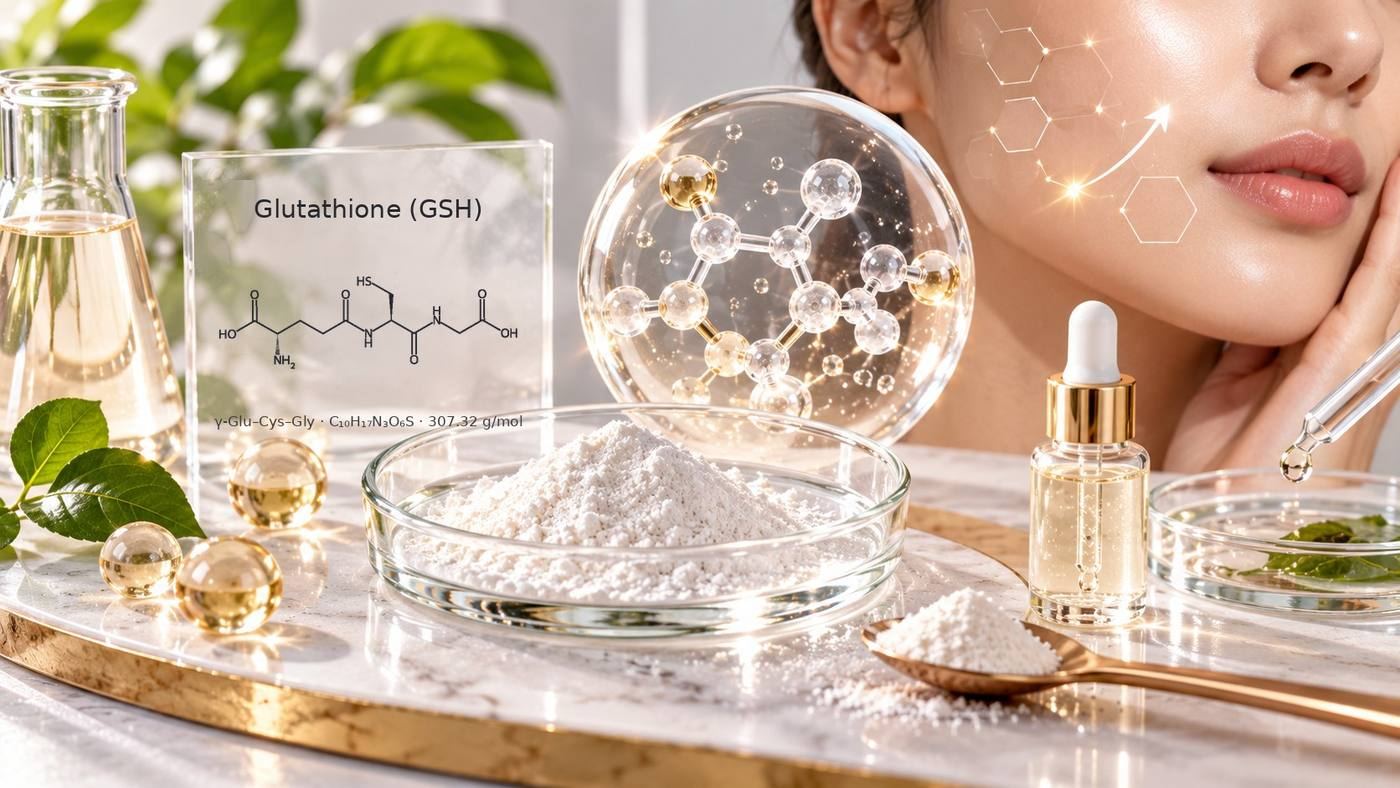
- A tripeptide antioxidant made by the body, used in cosmetics as reduced glutathione (GSH) or oxidised glutathione (GSSG)
- Main benefits
- Brighter, more even-looking tone; some data on smoother-looking, better-hydrated skin
- Levels tested in trials
- 2% oxidised glutathione lotion; 2% reduced glutathione gel; oral trials used 250 mg a day
- Time to results
- 10 to 12 weeks in controlled studies
- Watch for
- Rapid oxidation, odour, thin topical evidence and confusion with unapproved injectable use
01What is it?
Glutathione is a small peptide made of three amino acids. It is the body’s main internal antioxidant and occurs in every cell. In cosmetics it is used in its reduced form (GSH) or its more stable oxidised form (GSSG). It is especially popular in India, South-East Asia and the Gulf markets.
02What it does
Glutathione is thought to shift melanin production from darker eumelanin towards lighter pheomelanin and to dampen the oxidative stress that drives pigmentation. In one placebo-controlled study a 2% oxidised glutathione lotion lowered measured melanin over 10 weeks and improved skin moisture and smoothness. Effects in trials have been modest and, for oral use, did not last after stopping.
03The evidence
Studies below were checked against the publisher, DOI or journal record on 26 Sep 2026. We list design and size so you can judge the strength of each result.
| Study | Design | Who and how long | What it found |
|---|---|---|---|
| Watanabe et al. 2014, Clinical, Cosmetic and Investigational Dermatology (Dove Press) Source | Randomised, double-blind, matched-pair, placebo-controlled trial | 30 healthy women aged 30–50, 10 weeks, 2% oxidised glutathione lotion twice daily on one side of the face vs placebo | Melanin index was significantly lower than placebo from early weeks to the end of the study (p < 0.001 at 10 weeks), with better moisture, smoothness and fewer visible wrinkles later in the study; no marked side effects. |
| Bijalwan et al. 2024, JK Science (smaller regional journal) Source | Randomised, open-label, parallel trial against 3% tranexamic acid | 60 adults with melasma, 90 days, 2% reduced glutathione gel twice daily vs 3% tranexamic acid | Melasma score fell 67% with glutathione vs 44% with tranexamic acid (p = 0.009); mild redness in 2 of 30. Not blinded and in a smaller journal, so weaker evidence. |
| Weschawalit et al. 2017, Clinical, Cosmetic and Investigational Dermatology (Dove Press) – oral, for context Source | Randomised, double-blind, placebo-controlled, three-arm trial | 60 healthy adults (57 completed), 12 weeks, oral reduced or oxidised glutathione 250 mg a day vs placebo | Overall melanin differences versus placebo were not significant; melanin was lower only on sun-exposed forearms in people over 40 (p = 0.031). Two people had temporary rises in liver enzymes. |
| Sitohang and Ninditya 2020, Dermatology Research and Practice (Hindawi) – oral, for context Source | Evidence-based systematic review | 3 randomised trials of oral glutathione, 32 to 60 participants each | Concluded oral glutathione is not beneficial enough for skin lightening: effects appeared only on some body sites and did not last (in one trial no difference 6 months after stopping). |
| Sonthalia et al. 2018, Dermatology Practical & Conceptual Source | Narrative evidence review | Published trials of topical, oral, sublingual and intravenous glutathione | Found one topical trial with good safety and appreciable but reversible effects on skin tone; judged evidence for intravenous use limited to a single flawed study. |
| Alzahrani et al. 2025, Cureus (Springer Nature) Source | Narrative review | Topical, oral and intravenous glutathione studies | Topical forms lowered melanin with minimal, self-resolving side effects; oral effects were measurable but inconsistent; intravenous use carried risks such as anaphylaxis and liver toxicity. |
Topical glutathione may modestly brighten skin, but the evidence rests on one small placebo-controlled study and one unblinded trial. Its popularity is far ahead of its evidence. Suitable claim wording is cautious, such as “helps skin look brighter and more even”, ideally supported by the brand’s own instrumental study.
04How CSL formulation scientists use it
- Choose the form deliberately: oxidised glutathione (GSSG) is more stable in water than reduced glutathione (GSH) and is the form with the placebo-controlled topical data, at 2%.
- Reduced glutathione oxidises quickly in water, especially at higher pH, with metal ions and with air. CSL formulation scientists use chelators, low-oxygen processing, airless or single-dose packs, and anhydrous or encapsulated formats, and run real-time stability with assay of the active, not only appearance.
- Sulphur-containing glutathione can develop an odour as it breaks down; fragrance and pack choice need testing in the finished product.
- Pair it with better-evidenced brightening actives such as niacinamide, tranexamic acid or vitamin C derivatives, and daily sun protection, rather than relying on glutathione alone.
05Regulatory and claims
CSL works only on topical cosmetic formats. Injectable and intravenous glutathione for skin whitening is not an approved use: the Philippine health authorities have stated that intravenous glutathione is not approved for skin whitening, and in August 2026 the US FDA warned compounders not to use dietary-supplement-grade glutathione in injectables after at least 30 people had serious reactions. CSL regulatory specialists confirm the status of glutathione in each target market, including India, ASEAN and the GCC, and keep claims cosmetic (“brighter-looking skin”), never “whitening treatment” or “treats melasma”.
06Questions brands ask
Does topical glutathione really brighten skin?
There is some evidence. A 2% oxidised glutathione lotion lowered measured melanin versus placebo over 10 weeks in 30 women. That is one small study, so claims should stay modest.
Is oral glutathione better than topical?
Not clearly. Oral trials show small effects on some skin areas that fade after stopping, and a systematic review judged them not beneficial enough. CSL focuses on topical cosmetic products.
Why does glutathione go off in formulas?
The reduced form reacts readily with oxygen and metal traces, losing activity and sometimes developing an odour. The oxidised form, careful processing and protective packaging help keep it stable.
07References
- Watanabe F, Hashizume E, Chan GP, Kamimura A. Skin-whitening and skin-condition-improving effects of topical oxidized glutathione: a double-blind and placebo-controlled clinical trial in healthy women. Clin Cosmet Investig Dermatol. 2014;7:267–274. Link
- Bijalwan S, Randhawa GK, Kaur T. A prospective, randomized and open label study to compare efficacy, safety and quality of life impact of topical glutathione (2%) in comparison to topical tranexamic acid (3%) in adult melasma patients. JK Science. 2024;26(3):149–154. Link
- Weschawalit S, Thongthip S, Phutrakool P, Asawanonda P. Glutathione and its antiaging and antimelanogenic effects. Clin Cosmet Investig Dermatol. 2017;10:147–153. Link
- Sitohang IBS, Ninditya S. Systemic glutathione as a skin-whitening agent in adult. Dermatol Res Pract. 2020;2020:8547960. Link
- Sonthalia S, Jha AK, Lallas A, Jain G, Jhakar D. Glutathione for skin lightening: a regnant myth or evidence-based verity? Dermatol Pract Concept. 2018;8(1). Link
- Alzahrani et al. Exploring the safety and efficacy of glutathione supplementation for skin lightening: a narrative review. Cureus. 2025;17:e78045. Link
- US Food and Drug Administration. FDA reminds compounders not to use dietary supplement grade glutathione for injectables. 27 August 2026. Link
- Philippine Daily Inquirer. DOH warns against use of intravenous glutathione for skin whitening. Link
Used in: Brightening & radiance
Update log
- Evidence reviewed and page published by CSL scientists
This page summarises published research for brands and formulators. It is general information, not medical advice, and results in studies depend on the full formula tested.