Reformulating anti-dandruff shampoo after the EU zinc pyrithione ban
Zinc pyrithione was the workhorse of anti-dandruff shampoo for decades. Since March 2022 it can no longer be used in cosmetics sold in the EU. Here is how to reformulate without losing performance.
Executive summary
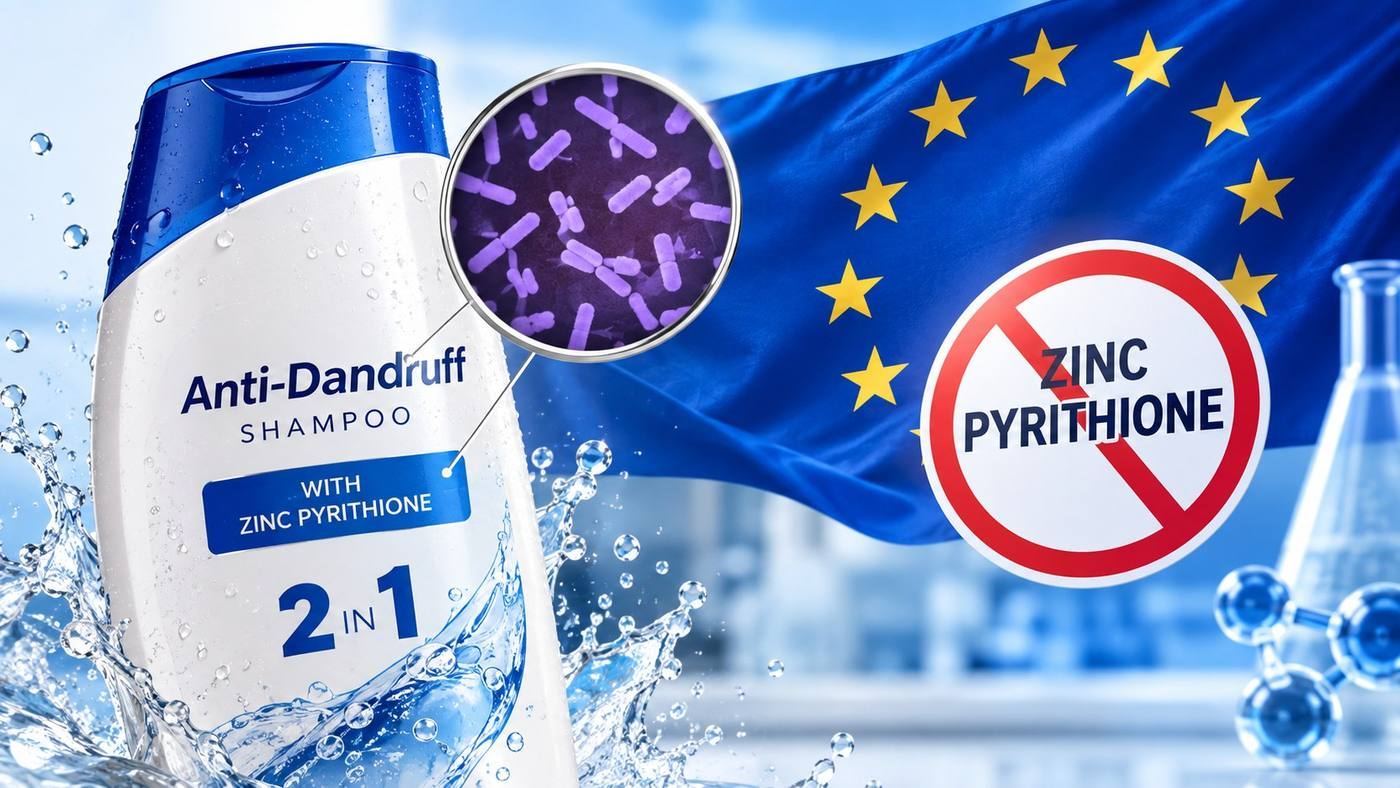
Zinc pyrithione has been banned in EU cosmetics since 1 March 2022. Brands selling anti-dandruff shampoo in the EU must reformulate with permitted actives and re-test efficacy, preservation and stability.
Take-home message for manufacturers
- Replace zinc pyrithione with permitted actives, often in combination
- Repeat the ISO 11930 challenge test, as ZPT also helped preservation
- Check colour and odour stability of the new system
Take-home message for brand owners
- Update the INCI list, CPSR and Product Information File
- Re-confirm “anti-dandruff” claims with new efficacy data
- Decide whether you need a separate US formula, where ZPT remains an OTC active
Why it was banned
Zinc pyrithione was classified as toxic for reproduction (CMR category 1B) under the EU CLP Regulation. Under Article 15 of the Cosmetics Regulation, CMR 1B substances are banned in cosmetics unless an exemption is granted. Regulation (EU) 2021/1902 added zinc pyrithione to the list of prohibited substances, applying from 1 March 2022.
The permitted alternatives
Several actives remain available for anti-dandruff shampoos in the EU, each within the limits set in the Cosmetics Regulation annexes:
- Piroctone olamine: widely used, good performance, works across hair types
- Climbazole: strong antifungal activity, often combined with piroctone olamine
- Salicylic acid: helps shift flakes; useful as a supporting active
- Selenium disulphide: effective, with restrictions on use
Combinations often match the old zinc pyrithione performance better than any single swap.
What to test after the switch
- Efficacy: expert flake grading over four weeks against the old formula
- Preservation: zinc pyrithione also helped protect the formula, so repeat the ISO 11930 challenge test
- Stability: some alternatives shift colour or odour over time
- Tolerance: in-use scalp tolerance, especially for daily-use claims
What changes on the label
Update the INCI list and remove any claim tied to zinc pyrithione. Check that “anti-dandruff” wording is still supported by the new efficacy data. The CPSR and Product Information File must be updated before the new formula goes on sale.
Other markets
The UK now sets its own cosmetic ingredient rules, so check the UK position separately. In the US, zinc pyrithione remains a permitted active in anti-dandruff products, which are regulated there as OTC drugs rather than cosmetics. A global brand may need two formulas, or one built on actives accepted everywhere it sells.
Questions readers ask
When did the EU ban zinc pyrithione in cosmetics?
From 1 March 2022, under Regulation (EU) 2021/1902.
Can I still sell a zinc pyrithione shampoo in the US?
Yes. In the US anti-dandruff shampoos are OTC drugs and zinc pyrithione remains a permitted active.
Need help with this?
Our product, testing and regulatory teams work on this every week.
This article is general information, not legal advice. Source: Commission Regulation (EU) 2021/1902.