Zinc oxide in sunscreen: what the evidence shows on safety and UV cover
Zinc oxide is a mineral UV filter that covers UVB and long UVA. Here is what human studies and regulators say, and how CSL formulation scientists turn it into sunscreens people will wear.
By CSL Formulation team · Evidence checked by CSL scientists
At a glance
- What it is
- Mineral (inorganic) UV filter, supplied as non-nano or nano powder, usually coated and pre-dispersed
- Main benefits
- Broad UVB and UVA cover, including long UVA; stays on the skin surface; well tolerated
- Levels tested in trials
- Up to 25%, the EU maximum and the level the US FDA proposes as safe and effective
- Time to results
- Protects as soon as an adequate layer is applied; long-term benefits come from daily use
- Watch for
- White cast, dispersion and thickening, and formats that could be inhaled (loose powders, sprays)
01What is it?
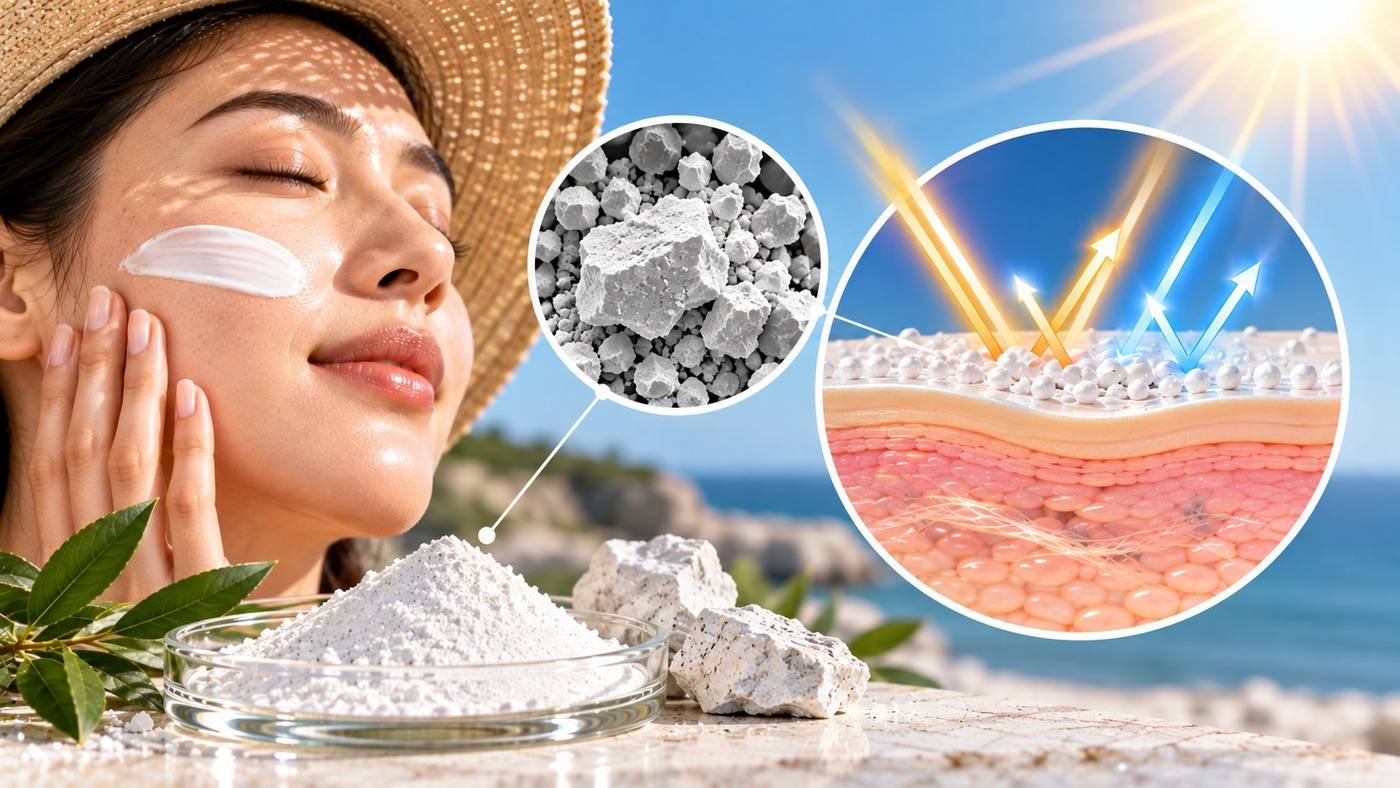
Zinc oxide is a white mineral powder used as a UV filter. It comes in larger (non-nano) and smaller (nano) grades. The smaller grades look much less white on skin. Most sunscreens combine it with other filters to reach a high SPF.
02What it does
Zinc oxide absorbs and scatters UV light across UVB and UVA, including the long UVA range that many filters miss. Human studies show the particles stay on the skin surface and in skin folds rather than entering living skin. The visible benefit is the same as any good sunscreen: less sunburn and, with daily use, less sun-related ageing.
03The evidence
Studies below were checked against the publisher, DOI or journal record on 26 Sep 2026. We list design and size so you can judge the strength of each result.
| Study | Design | Who and how long | What it found |
|---|---|---|---|
| Mohammed et al. 2019, Journal of Investigative Dermatology (Elsevier) Source | Human in-vivo exposure study, no control group | 5 volunteers aged 20–30, commercial nano zinc oxide sunscreen applied hourly for 6 hours, then daily for 5 days | Particles stayed on the surface and in skin furrows; none entered living epidermis and no cell damage was seen, only a slight rise in zinc ions. |
| Khabir et al. 2021, International Journal of Molecular Sciences (MDPI) Source | Laboratory study on excised human skin (not in volunteers) | Zinc-67-labelled nano zinc oxide in a sunscreen, 48 hours at 35 °C | Zinc reaching living epidermis (1.0 µg/mL) was below natural skin zinc (4.3 µg/mL) and far below toxic levels (21–31 µg/mL). |
| US FDA 2021, Proposed Order OTC000008 (regulatory review) Source | Review of the public safety and efficacy record for sunscreen actives | Zinc oxide up to 25% in sunscreens | FDA proposed zinc oxide as safe and effective (GRASE) up to 25%, noting penetration stays in the upper, non-living skin layer whatever the particle size. |
| European Commission 2016, Regulation (EU) 2016/621 (regulatory decision) Source | Legal listing after an SCCS safety assessment | Nano zinc oxide as a UV filter, up to 25% | Nano zinc oxide allowed only if it meets purity, particle-size (median above 30 nm), solubility and coating conditions, and never in uses that could be inhaled. |
Zinc oxide is a proven, well-tolerated UV filter with a strong safety record in human skin studies. Its benefit comes from the sunscreen as a whole, so claims should describe the tested product: “broad-spectrum protection”, “helps prevent sunburn” and, for daily wear, “helps protect against visible signs of sun ageing”. Avoid claims that zinc oxide alone repairs or treats skin.
04How CSL formulation scientists use it
- Use coated, pre-dispersed grades to reduce whitening and clumping; dispersion quality drives SPF far more than the percentage on the label.
- Pair zinc oxide with other filters to reach high SPF and balanced UVA cover at lower loads; very high loads thicken and whiten the formula.
- Check compatibility: zinc can react with some acids and thickeners, so test pH drift and viscosity over time.
- Choose formats with care: loose powders and sprays raise inhalation questions, and the EU does not allow uses that may expose the lungs.
05Regulatory and claims
In the EU, zinc oxide is an Annex VI UV filter up to 25%; the nano form (entry 30a, added by Regulation (EU) 2016/621) must meet set purity, particle-size, solubility and coating conditions, and neither form may be used where it could be inhaled. In the US, sunscreens are OTC drugs; FDA’s 2021 proposed order lists zinc oxide as GRASE up to 25%. CSL regulatory specialists confirm the status and nano labelling rules in each target market, and keep claims cosmetic.
06Questions brands ask
Is nano zinc oxide safe on skin?
Human and skin-sample studies show nano particles stay on the surface and do not reach living skin. The EU allows the nano form under strict particle and coating conditions.
Does mineral mean better than chemical filters?
Not in itself. Zinc oxide gives broad cover and is well tolerated, but modern organic filters are also effective. The finished formula and its testing matter most.
Can zinc oxide be used in a spray or powder?
Only with care. The EU bars zinc oxide in uses that may lead to inhalation, so CSL formulation scientists usually recommend lotions, creams, sticks or cushions instead.
07References
- Mohammed YH, Holmes A, Haridass IN, et al. Support for the safe use of zinc oxide nanoparticle sunscreens: lack of skin penetration or cellular toxicity after repeated application in volunteers. J Invest Dermatol. 2019;139(2):308–315. Link
- Khabir Z, Holmes AM, Lai YJ, et al. Human epidermal zinc concentrations after topical application of ZnO nanoparticles in sunscreens. Int J Mol Sci. 2021;22(22):12372. Link
- US Food and Drug Administration. Proposed Order OTC000008: Amending Over-the-Counter Monograph M020, Sunscreen Drug Products. September 2021. Link
- Commission Regulation (EU) 2016/621 of 21 April 2016 amending Annex VI to Regulation (EC) No 1223/2009 on cosmetic products (zinc oxide, nano). Link
Used in: Sun protection
Update log
- Evidence reviewed and page published by CSL scientists
This page summarises published research for brands and formulators. It is general information, not medical advice, and results in studies depend on the full formula tested.