What barrier-repair skin care buyers in India want, and how product development delivers it
Barrier repair has moved from dermatology clinics to everyday moisturisers. Here are the five expectations that come up in barrier-repair briefs, how each one becomes a formulation choice, three buyer segments and a checklist before you brief a lab. Part of our product formulation series.
By Dr. Premalatha, Ph.D., Life Science, Regulatory Consultant, Cosmetic Science Lab
At a glance
- Who it is for
- Brands planning hydration or barrier-repair skin care for India
- What you get
- Five buyer expectations, a brief-writing table, three buyer segments and a checklist
- Key point
- Name the buyer, the skin feel and the claim before choosing ingredients
- Caveat
- Buyer expectations reflect the briefs CSL receives, not a market survey
Quick answer
- What do barrier-repair buyers want? Textures that suit the climate, visible lipid support, gentle formulas, claims they can trust and fair pricing.
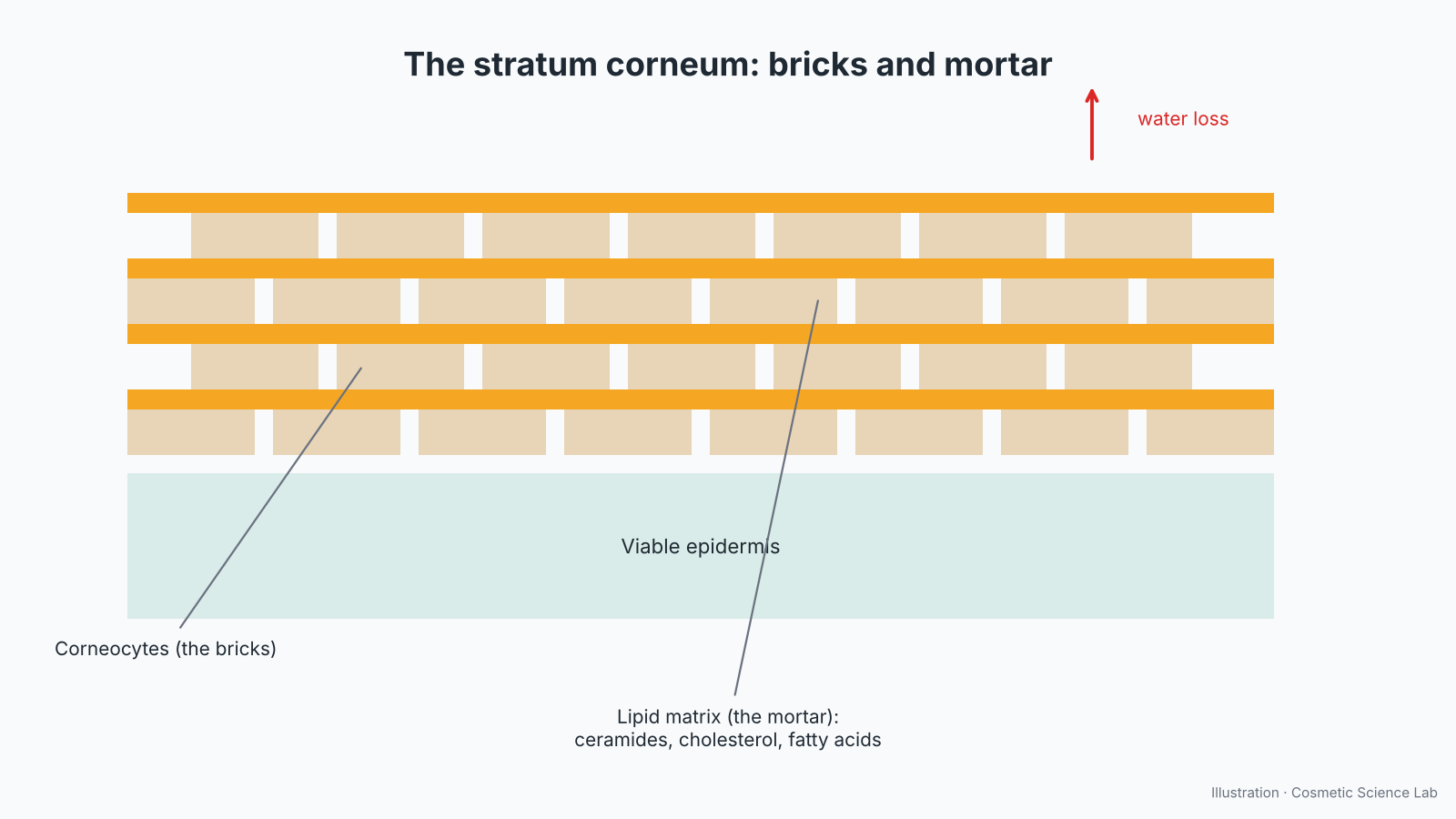
- The barrier is "bricks and mortar": skin cells in a lipid matrix of ceramides, cholesterol and free fatty acids [1].
- A barrier product balances humectants, emollients and occlusives with lipid-replenishing ingredients [3].
- Plan hydration and water-loss testing during development, so claims are measured before launch.
Take-home message for brand owners
- Write one brief per buyer segment; one heavy cream rarely serves every climate.
- Use measured claim language such as "supports the skin barrier", backed by testing.
Take-home message for formulators
- Match the lipid system to the emulsifier and the processing temperature.
- Model ingredient cost at concept stage, not after the prototype.
01Why barrier repair has moved into everyday skin care
Barrier repair used to be a conversation held in dermatology clinics. Today it sits on the front of moisturiser jars, in cleanser claims and in the briefs founders send to formulation labs. For brands looking at cosmetic product development in India, knowing what these buyers want is the fastest way to write a brief that produces a product people reorder.
The outer skin layer, the stratum corneum, is often described as bricks and mortar: flattened cells embedded in a lipid matrix of ceramides, cholesterol and free fatty acids [1]. When that matrix is disturbed by harsh cleansing, low humidity and other environmental stresses, skin loses water faster and can react to products it once tolerated [1][2].
Buyers have picked up this vocabulary from dermatologists, social media and ingredient lists, and in the briefs we receive, terms such as ceramides, humectants and "skin barrier" now come up routinely. A product built for hydration and barrier repair must deliver on a promise the buyer already understands. That helps brands: a clear, science-led story is easier to explain, substantiate and differentiate than a vague promise of glowing skin.
02What barrier-repair buyers in India expect
Across the hydration and barrier-repair briefs we receive, five expectations come up repeatedly.
- Textures that suit the climate.
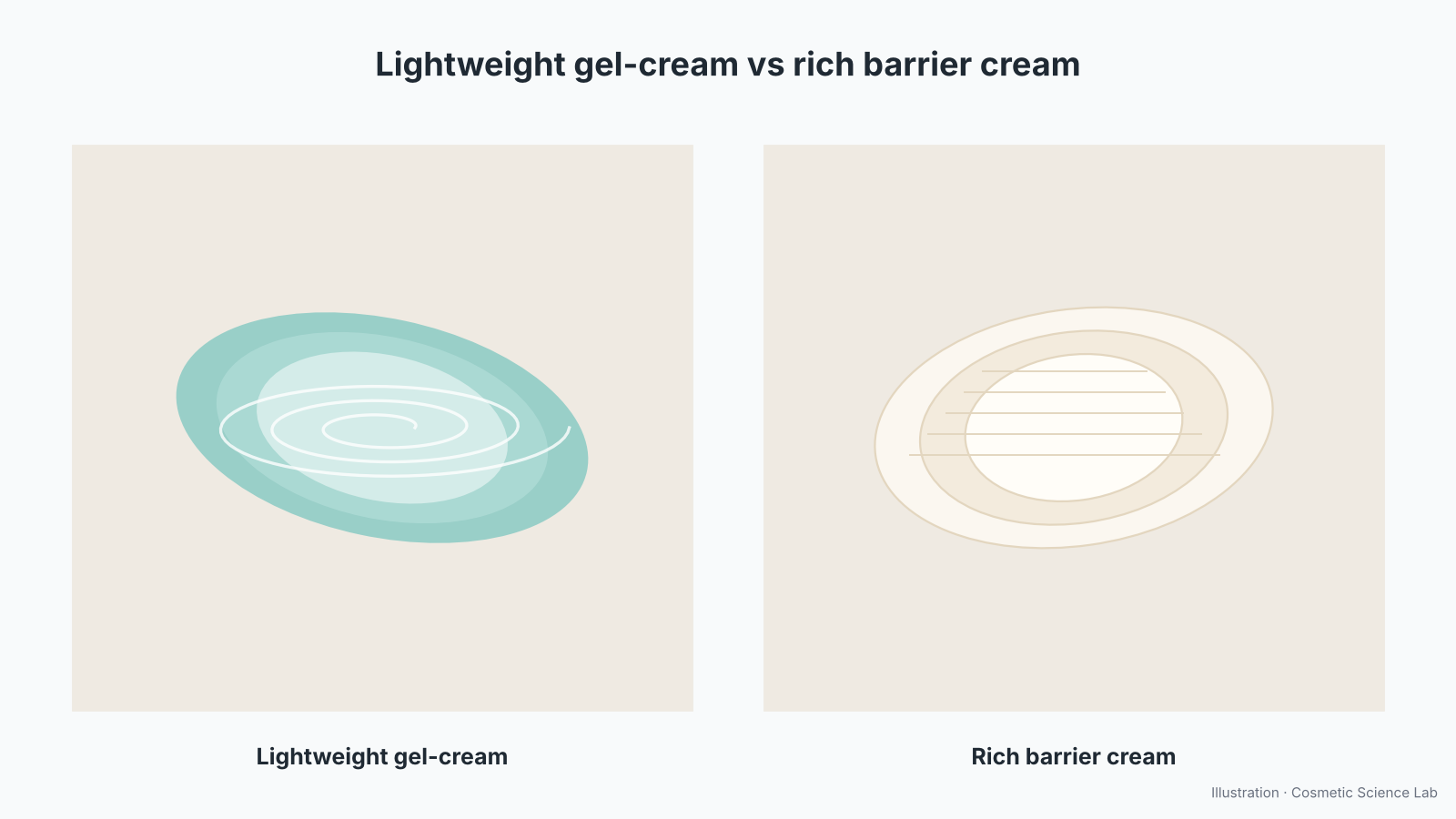
Buyers in humid cities want hydration without stickiness, while those in dry or air-conditioned rooms want more cushion. A single heavy cream rarely serves both.
- Visible lipid support.
Ceramides, cholesterol, fatty acids and skin-identical lipids are expected on the label, not only in the marketing copy.
- Gentle, low-risk formulas.
Many buyers have reacted to strong actives before. They look for fragrance-free or lightly scented products and short ingredient lists.
- Claims they can trust.
"Repairs the barrier" invites scrutiny. Measured language such as "supports the skin barrier", backed by testing, builds more confidence.
- Fair pricing across tiers.
A formula must perform without depending on one expensive hero ingredient.
03How these expectations become formulation choices
A barrier-repair product usually combines three functional groups: humectants that attract water, emollients that smooth and soften, and occlusives that slow water loss [3]. Lipid-replenishing ingredients sit alongside them. The balance between these groups decides how the product feels as much as how it performs.
| Buyer expectation | Formulation implication | What to state in your brief |
|---|---|---|
| Light, non-sticky hydration | Lower occlusive load; humectants and polymers tuned for slip | Target skin feel, climate and season of use |
| Ceramide-led repair | Lipid system compatible with the emulsifier; correct processing temperature | Preferred lipid types and label positioning |
| Sensitive-skin tolerance | Careful preservative and fragrance choices; skin-friendly pH | Fragrance policy and sensitive-skin positioning |
| Credible claims | A plan for instrumental or consumer testing | Claims you want and the budget for evidence |
| Accessible price | Ingredient cost modelling at concept stage | Target cost per unit and pack size |
A brief that names the buyer, the skin feel and the claim up front saves weeks of revision later. Why ceramides alone are not enough is covered in our barrier repair cream formulation guide.
04Three buyer segments, three different briefs
"Barrier-repair buyer" is not one person, and each segment points to a different product.
- Routine builders are starting with a cleanser, moisturiser and sunscreen. They want simple, affordable, gentle products and a clear reason to choose yours.
- Ingredient-literate buyers read the full ingredient list and compare ceramides, hyaluronic acid and panthenol across brands. They expect the formula to match the front-of-pack story.
- Treatment users apply retinoids or exfoliating acids and treat barrier care as recovery. They value comfort, low irritation and a texture that sits well under other products; see our sensitive skin page.
05Earning trust with testing
Hydration and barrier claims are easier to defend when they are measured. Skin hydration and transepidermal water loss can be assessed with instrumental methods, while consumer perception studies capture how the product feels in daily use. The right mix depends on the claim: a sensory claim such as "non-greasy" needs different evidence from a performance claim such as "hydrates for 24 hours". Deciding this during development keeps claims honest and costs predictable. In our experience, retailers and marketplaces increasingly ask how a claim is supported, so build claims testing into the plan rather than adding it later.
06Where a product development partner adds value
Founders can source ingredients and manufacturers on their own, but a development partner closes the gap between an idea and a shelf-ready product: turning a buyer insight into a specification, building and refining prototypes, running stability checks and preparing the documentation that supports labelling and licensing under the Cosmetics Rules, 2020 [4]. Our guide to the Cosmetics Rules, 2020 explains that documentation.
It also means saying no. A good formulation team will tell you when a claim needs stronger evidence, when an ingredient combination is unstable, or when a target price will compromise performance. The cosmetic product development process explains each stage.
07A short checklist before you brief a lab
- Define the buyer: age band, skin concerns, city or climate, and usual routine.
- Choose a format, such as gel-cream, lotion, serum or balm, and the pack that protects it.
- List must-have and must-avoid ingredients, including fragrance and allergens.
- Write the claims you hope to make and the evidence you can fund.
- Set a unit cost, minimum order quantity and launch window.
Earlier in the journey? Read how to start a skincare line. Next in this cluster: what the Cosmetics Rules, 2020 require of your formula.
Planning a hydration or barrier-repair launch?
CSL formulation chemists turn a buyer brief into a barrier-repair formula, with prototypes, stability, claims testing and the pilot batch.
08Questions readers ask
What makes a moisturiser barrier-repairing?
A balance of humectants, emollients and occlusives, plus lipids such as ceramides, cholesterol and fatty acids that support the stratum corneum.
Is a ceramide cream enough for barrier repair?
Not on its own. The lipid blend, the emulsion, the pH and the processing all decide whether the ceramides help.
Which texture suits humid Indian cities?
Lighter gel-creams with a lower occlusive load usually suit humid climates; richer creams suit dry or air-conditioned rooms.
How are barrier claims tested?
Skin hydration and transepidermal water loss are measured instrumentally, and consumer studies cover how the product feels.
09References
- Elias PM. Stratum corneum defensive functions: an integrated view. J Invest Dermatol. 2005;125(2):183–200. doi:10.1111/j.0022-202X.2005.23668.x
- Rawlings AV, Harding CR. Moisturization and skin barrier function. Dermatol Ther. 2004;17 Suppl 1:43–8. doi:10.1111/j.1396-0296.2004.04S1005.x
- Purnamawati S, Indrastuti N, Danarti R, Saefudin T. The role of moisturizers in addressing various kinds of dermatitis: a review. Clin Med Res. 2017;15(3–4):75–87. doi:10.3121/cmr.2017.1363
- Ministry of Health and Family Welfare (India). The Cosmetics Rules, 2020. G.S.R. 763(E), 15 Dec 2020, as amended. New Delhi: CDSCO. CDSCO (PDF)
Update log
- Published by Cosmetic Science Lab
This article is general technical information, not legal, regulatory or medical advice. Confirm requirements for your product and market before launch.